
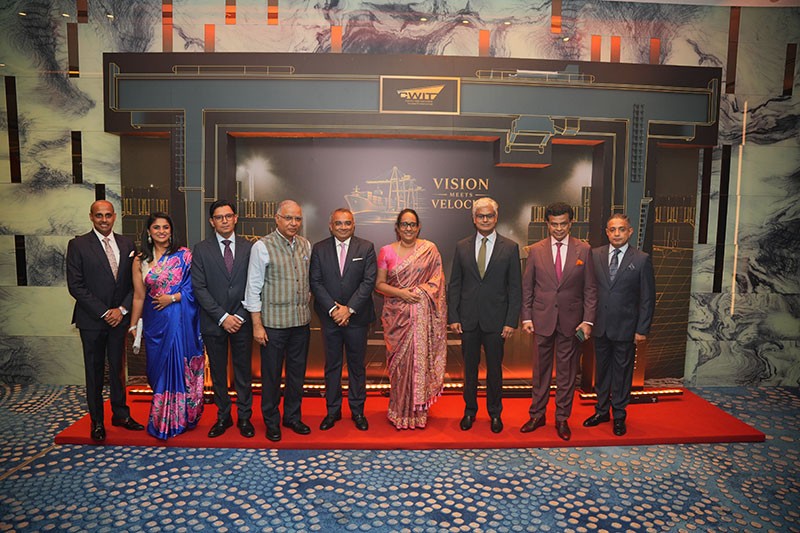
With the expansion, the terminal’s capacity will double from 1.6 million to 3.2 million TEUs, strengthening CWIT’s ambition to handle nearly 25% of the Port of Colombo’s targeted 13 million TEU capacity by 2028.
CWIT, which previously set a record by becoming the fastest terminal to handle 1 million TEUs within its inaugural year in 2024, has now achieved another milestone by handling 2 million TEUs within its first 18 months of operations.
“The success of Colombo West International Terminal demonstrates what Sri Lanka can achieve when bold vision, trusted partnerships and modern infrastructure come together. Reaching 2 million TEUs in record time and commencing Phase II today is not just a milestone for the Port of Colombo, but a milestone for our nation's economic future,” Prime Minister Amarasuriya said.
“As Sri Lanka strengthens its position at the crossroads of global trade, investments such as CWIT are creating jobs, attracting international commerce, enhancing competitiveness, and reinforcing our ambition to become the leading maritime and logistics hub of the Indian Ocean,” she added.
With the additional capacity, CWIT will be able to berth three ultra-large container vessels simultaneously, further strengthening Colombo’s position as a key transshipment hub on the East-West trade route.
“Doubling CWIT's capacity to 3.2 million TEUs with a USD 750 million investment is a direct statement of confidence from APSEZ and from the global shipping lines. Phase II is a landmark for APSEZ's international portfolio and sharpens our position across the Indian Ocean's key trade corridors,” Ashwani Gupta, Whole-Time Director and CEO, APSEZ, said.
“With expanded capacity, full automation and deep-water infrastructure, CWIT is built to be Colombo's premier transshipment gateway and contribute to EXIM cargo in Sri Lanka,” he added.
Krishan Balendra, Chairperson of John Keells Group, said the 2 million TEU milestone in 18 months reflected the strength of the partnership behind the terminal.
“With the expansion of the terminal, we see an even greater opportunity to strengthen Colombo’s position as a key transshipment hub and support Sri Lanka’s growth as an important centre for trade in the region. We are pleased to be part of this journey alongside APSEZ and the Sri Lanka Ports Authority,” Balendra said.
CWIT is Sri Lanka’s first fully automated deep-water container terminal and is designed to serve some of the world’s largest container vessels through fully electrified operations and zero tailpipe emissions.
The terminal has recorded 17 million safe working hours, highlighting its safety and workforce credentials alongside its operational and environmental performance.