
The report underscores that the cost of inaction is mounting, as communities around the world continue to bear the consequences of a crisis that could have been mitigated through urgent cuts in greenhouse gas emissions.
Key findings
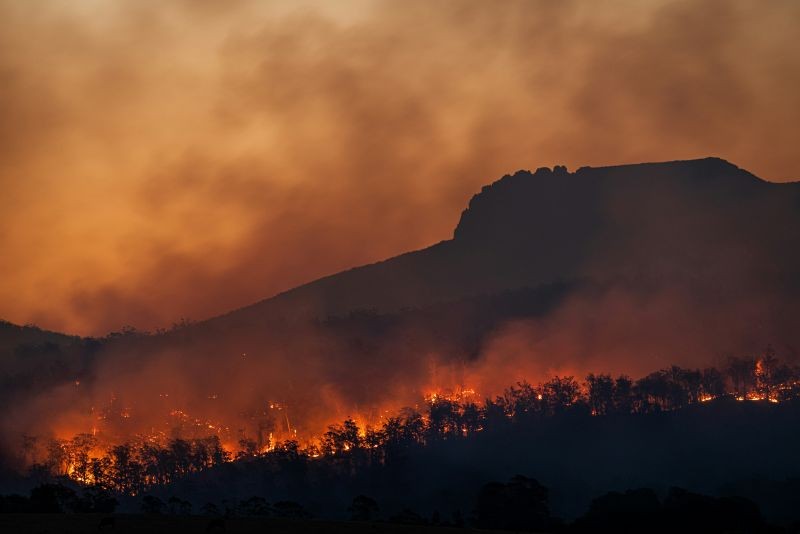
Christian Aid identified the 10 costliest climate-influenced extreme weather events of the year, each causing over $1 billion in damage. The Palisades and Eaton wildfires in California were the single most destructive events, causing more than $60 billion in losses and leading to over 400 deaths.
The report also examines 10 additional extreme events that caused severe human and environmental damage but did not generate enough insured losses to rank among the top ten—often because they occurred in poorer countries where insurance coverage is limited and data is scarce.
Across the top ten, total losses exceeded $122 billion, with most estimates based only on insured damage, suggesting that the true economic cost is significantly higher. Human costs, the report notes, are frequently underreported or not counted at all.
Global impacts
No region of the world was spared in 2025. The UK experienced devastating wildfires driven by record-breaking heatwaves in Scotland, while Canada endured extensive droughts. The report also highlights typhoons in the Philippines, historic floods in China, and record wildfires across Spain and Portugal.
Asia accounted for four of the six costliest disasters. Flooding in India and Pakistan killed more than 1,860 people, cost up to $6 billion, and affected over 7 million people in Pakistan alone. Typhoons in the Philippines caused more than $5 billion in damage, displacing over 1.4 million people.
The second-costliest disaster of the year occurred in Southeast Asia, where cyclones and floods in November caused $25 billion in losses and killed more than 1,750 people across Thailand, Indonesia, Sri Lanka, Vietnam and Malaysia. Meanwhile, floods in China displaced thousands, caused $11.7 billion in damage, and killed at least 30 people.
In poorer nations, the impacts were often deadlier despite lower insured losses. Flooding in Nigeria and the Democratic Republic of Congo affected thousands, with up to 700 deaths reported in Nigeria alone. Prolonged drought in Iran and West Asia has pushed Tehran toward a severe water crisis, threatening up to 10 million people with potential evacuation.
Unusual and alarming events were also recorded, including wildfires in the Scottish Highlands that burned 47,000 hectares, an extreme year of both heavy snowstorms and record heat in Japan, and climate-related extremes in Antarctica and the world’s oceans. Record sea temperatures triggered severe coral bleaching off Western Australia, posing major threats to marine biodiversity.
Calls for urgent action
Christian Aid said the findings underscore the urgent need to cut carbon emissions, accelerate the transition to renewable energy, and significantly increase financial support for vulnerable communities.
“These disasters are not ‘natural’ — they are the predictable result of continued fossil fuel expansion and political delay,” said Professor Joanna Haigh, Emeritus Professor of Atmospheric Physics at Imperial College London.
Christian Aid CEO Patrick Watt said the year once again exposed the reality of climate breakdown. “Violent storms, devastating floods and prolonged droughts are turning lives and livelihoods upside down. The poorest communities are first and worst affected,” he said.
“These disasters are a warning of what lies ahead if we do not accelerate the transition away from fossil fuels. They also underline the urgent need for adaptation, particularly in the global South, where resources are stretched and people are especially vulnerable to climate shocks.”
Mohamed Adow, Director of Power Shift Africa, said wealthy nations often focus on financial losses while poorer regions count human suffering. “Millions of people across Africa, Asia and the Caribbean are counting lost lives, homes and futures,” he said, calling for scaled-up climate finance and faster emissions cuts in 2026.
Davide Faranda, Research Director at France’s LSCE climate institute, warned that the events documented are not isolated incidents. “They are the predictable outcome of a warmer atmosphere and hotter oceans, driven by decades of fossil fuel emissions,” he said. “What we are seeing in 2025 is not a warning of the future; it is the present reality of climate breakdown.”