
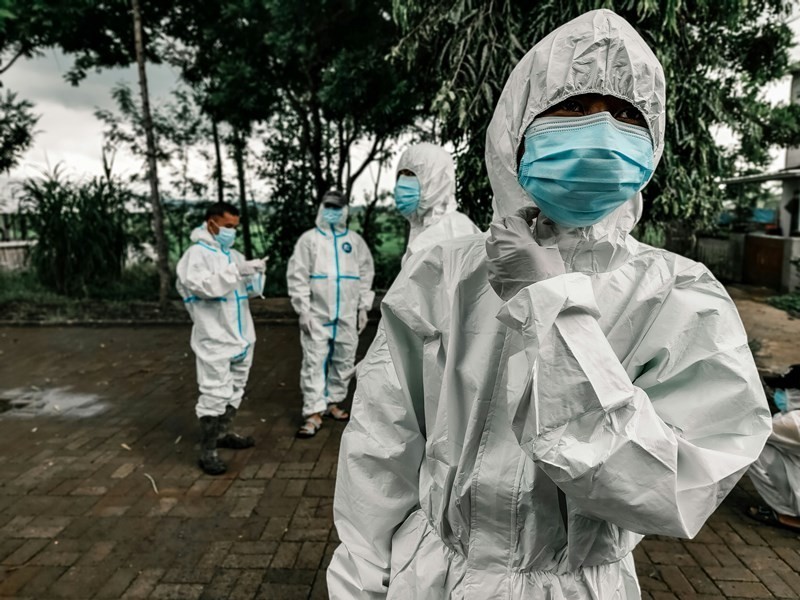
He said the epicentre of the outbreak remains Ituri province, home to nearly five million people and a region grappling with persistent armed conflict.
Highlighting the severity of the humanitarian crisis, Tedros wrote on X: “Today, 1 in 4 people are in need of humanitarian assistance, and 1 in 5 are internally displaced.”
He warned that escalating violence in the region is severely hampering efforts to contain the outbreak.
As surveillance efforts have been scaled up in the #DRC #Ebola response, more than 900 suspected cases have been identified so far, including 101 confirmed cases.
— Tedros Adhanom Ghebreyesus (@DrTedros) May 24, 2026
In Ituri province, the epicentre of the outbreak, nearly 5 million people live amid ongoing conflict. Today, 1 in 4… pic.twitter.com/hgIydPGZxD
“The violence is forcing people to flee, including health and humanitarian workers. This is severely impeding efforts to scale up Ebola contact tracing and identify infections early enough to provide supportive care. Ongoing insecurity and fear are also fueling mistrust within communities,” Tedros said.
Despite the deteriorating security situation, he noted that the World Health Organization (WHO) and its humanitarian health partners continue to maintain a presence across Ituri, including in some of the hardest-to-reach and most insecure areas.
“Communities are facing not only the threat of Ebola, but also a wide range of diseases,” he added.
The latest Ebola outbreak, alongside recent hantavirus cases, underscores the world’s continued vulnerability to fast-spreading infectious diseases, Tedros had warned earlier on Saturday at the close of the 79th World Health Assembly in Geneva.
His warning came as Ugandan authorities confirmed three new cases of the Bundibugyo strain of the Ebola virus — a strain for which there is currently neither an approved vaccine nor a specific cure.
“The three new cases include a Ugandan health worker, a driver, and a Congolese national who travelled from Ituri Province in the neighbouring Democratic Republic of the Congo for medical care,” Tedros said in a social media post.
“This brings the total number of people in Uganda who have tested positive for Ebola disease caused by the Bundibugyo virus to five.”
WHO is working closely with the Africa Centres for Disease Control and Prevention (Africa CDC) and other partners in both the DRC and Uganda to contain the outbreak, support affected communities, and coordinate emergency response efforts.
On Friday, the WHO raised the national Ebola risk assessment for the DRC to “very high,” while maintaining that the global risk remains low.