
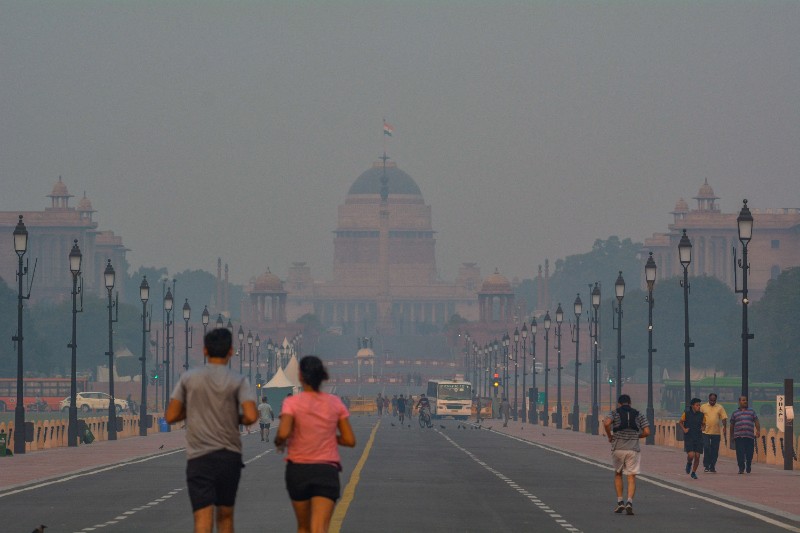
While crop-residue burning in Punjab and Haryana remains a major concern, an unusually high number of agricultural fires across Pakistan’s Punjab province may also be adding to the regional pollution burden.
Delhi’s air quality index (AQI) entered the ‘very poor’ category for the first time this season on Monday, November 2.
By Tuesday, the average AQI stood at around 330, while at least three monitoring stations recorded readings above 400, placing them in the ‘severe’ category.
The early deterioration has raised concerns about another prolonged spell of winter smog across the National Capital Region (NCR), with weather conditions making it difficult for pollutants to disperse.
Delhi pollution worsens ahead of Diwali
Delhi usually experiences its worst winter pollution after Diwali, when falling temperatures, stagnant winds, crop-residue burning and firecracker emissions combine to worsen air quality.
This year, however, the deterioration has begun earlier. On October 30, after rainfall, Delhi’s AQI fell to 60.
The city also recorded its cleanest October air quality in more than eight years, with an average AQI of 167.
The subsequent rise in pollution prompted authorities to implement Stage II measures under the Graded Response Action Plan (GRAP).
These include increased water sprinkling, deploying anti-smog guns, and stricter monitoring of construction sites.
According to the Central Pollution Control Board (CPCB), an AQI reading between 301 and 400 falls in the ‘very poor’ category, while readings between 401 and 500 are classified as ‘severe’.
The timing marks a significant shift from last year.
In 2025, Delhi’s AQI first entered the ‘very poor’ category on Diwali eve, October 19, when GRAP Stage II restrictions also came into force.
This year, the city crossed the 300 mark nearly a week before the festival.
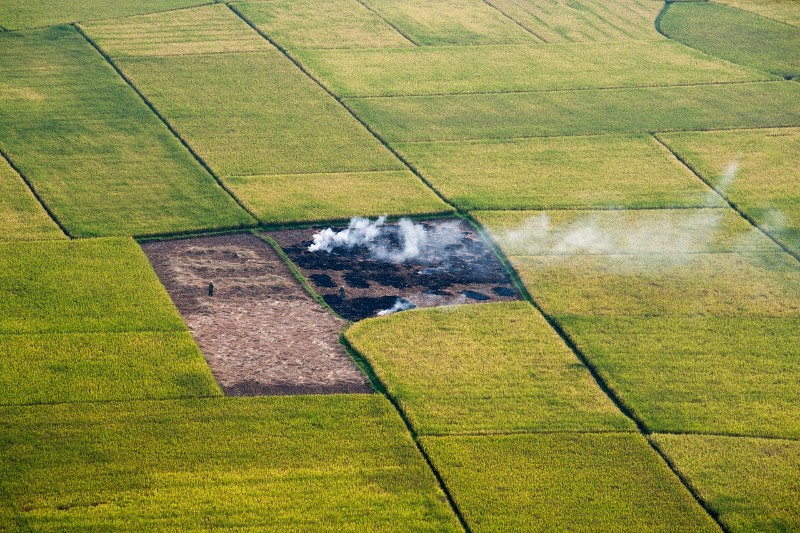 Photo: Pixabay/@xuanduongvan87
Pakistan’s Punjab records unusually high crop fires
Meteorological experts have pointed to a sharp increase in agricultural fires across Pakistan’s Punjab province as one of the factors potentially aggravating the pollution across northern India.
Northwesterly winds are currently blowing across the region, creating conditions in which smoke from crop fires in Pakistan could travel towards Indian Punjab, Haryana and Delhi-NCR.
Relatively low wind speeds are also limiting the dispersal of pollutants.
The geography of the northern plains compounds the problem, as the landlocked region can trap polluted air close to the ground.
Meteorological expert Navdeep Dahiya highlighted the scale of agricultural burning in the region in a post on X.
“Active stubble burning across Pakistan and Punjab is peaking now. Northern plains are, as usual, acting up as landlocked geography. As the fires continue to rise and local emissions will keep on adding, the AQI across the region is expected to deteriorate further in the coming days,” he wrote.
Active stubble burning across Pakistan and Punjab are peaking now on. The meteorological factors are favourable for the smoke plumes to travel across Punjab, Haryana, Delhi NCR and Uttar Pradesh as wind direction is from north west and speed is relatively calm. Northern plains as usual acting up as land-lock geography. As the fires continue to rise and local emissions will keep on adding, The #AQI across the region is expected to deteriorate further in the coming days. We could expect first day of severe AQI within next 3 days. #Smog will intensify in night and morning hours. Brace for impact, Limit outdoor exposure to the extent possible specially for Elderly and Childrens.
— Weatherman Navdeep Dahiya (@navdeepdahiya55) November 2, 2026
Satellite-based observations also indicate a substantial difference in the number of crop-fire detections on the two sides of the border.
According to a report by Dawn, Pakistan’s Punjab recorded 13,241 stubble-burning incidents between October 1 and 29, compared with 3,158 detections in Indian Punjab.
The figures are based on NASA’s Fire Information for Resource Management System (FIRMS), which uses satellite instruments to identify active fires.
The difference means that Pakistan’s Punjab recorded around 4.2 times as many fire detections as Indian Punjab during the period.
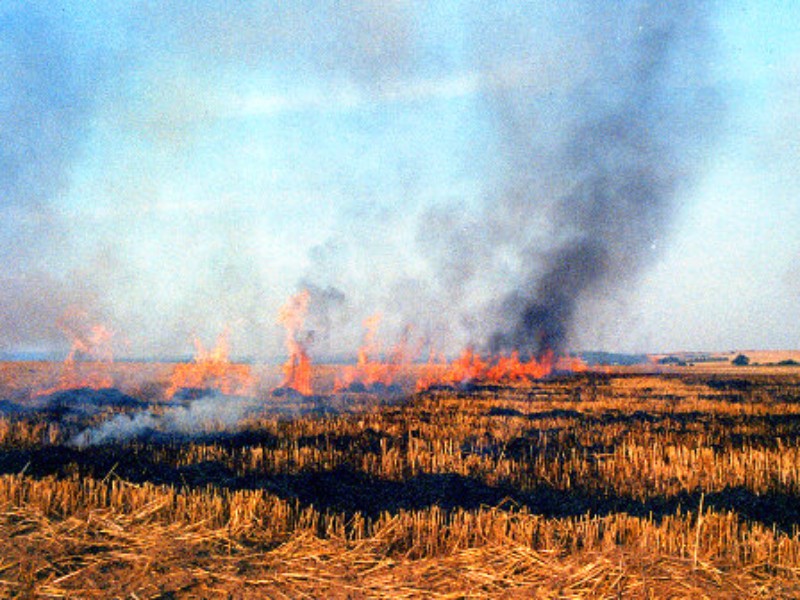 Photo: Wikimedia Commons/T.Voekler
Lahore faces severe pollution as fires surge
The agricultural fires reportedly intensified towards the end of October.
Pakistan’s Punjab recorded 6,655 detections in the final seven days of the month alone, accounting for nearly half of its total for October.
A significant concentration of fires was reported in the rice-growing belt around Lahore.
The city was ranked the world’s most polluted on November 2, with reports from Pakistan indicating that the AQI had crossed 500 in several areas.
The figures also point to a reversal of the pattern observed in 2019, when Indian Punjab recorded nearly five times as many crop-fire detections as Pakistan’s Punjab.
An analysis cited by Dawn found that satellite-detected crop fires in India's Punjab declined by 95 percent between 2021 and 2025.
In contrast, detections in Pakistan increased by 33 percent between 2019 and 2025.
However, the higher number of fires across Pakistan does not, by itself, establish how much smoke travelled into Delhi or how much it contributed to the capital’s pollution.
The figures indicate the scale of agricultural burning, while the movement and impact of smoke depend on prevailing atmospheric conditions.
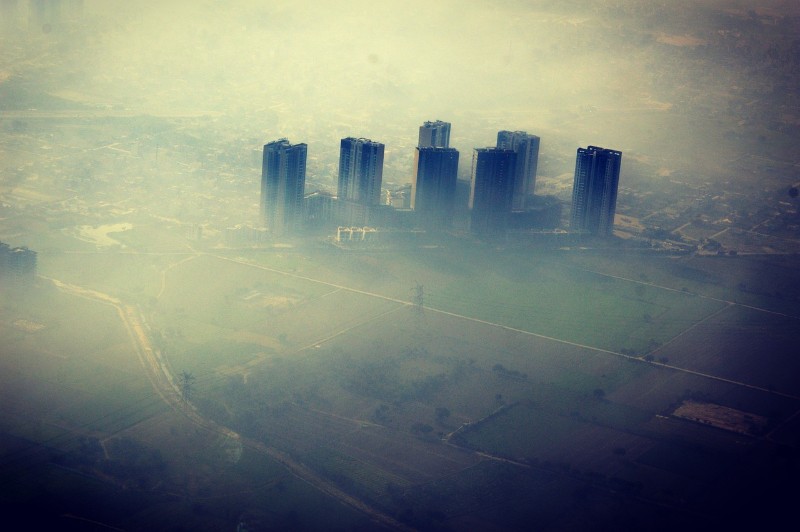 Photo: Pixabay/@alvpics
Weather conditions could worsen Delhi’s air quality
The deterioration in Delhi’s air quality reflects several overlapping factors, including falling temperatures, sluggish winds and continued stubble burning in Punjab and Haryana.
Untimely rainfall in northern India, associated with Cyclone Arnab, also reportedly disrupted harvesting in October, leaving some farmers unable to clear their fields on schedule.
A senior CPCB official told ThePrint that the delayed harvesting could lead to a fresh rise in crop-residue fires.
“Many of them will now rush to do that, which will lead to an accumulation of stubble fires,” the official said.
The India Meteorological Department’s forecast indicated that northwesterly winds were likely to continue for the next four days.
Such conditions could carry smoke from agricultural fires in Pakistan, Punjab and Haryana towards Delhi-NCR.
With wind speeds remaining relatively low, pollutants are also likely to remain concentrated closer to the ground.
Dahiya warned that the region could record its first day of ‘severe’ air quality within days.
“We could expect the first day of severe AQI within the next 3 days,” he said.
Diwali adds to concerns over pollution
The coming days are expected to be critical for Delhi-NCR as the region approaches Diwali.
Smoke from crop-residue burning, combined with unfavourable weather conditions, has already pushed air quality into the ‘very poor’ category.
The possibility of additional emissions from firecrackers during the festival could further add to the pollution burden.
With northwesterly winds expected to persist and agricultural fires continuing across the region, Delhi faces the prospect of worsening air quality before the usual peak of the winter pollution season.