
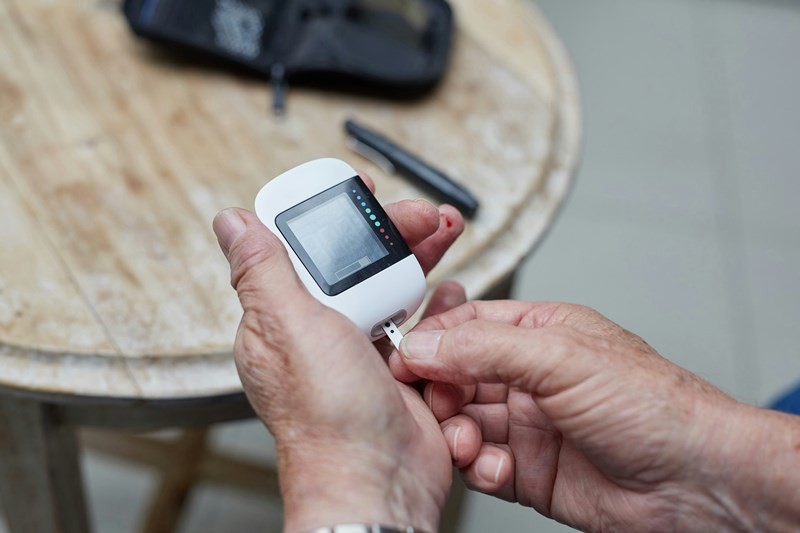
Metabolic diseases have reached epidemic levels globally, driven by sedentary lifestyles and circadian misalignment—a disruption between the body’s internal biological clocks and environmental cues such as light and darkness. Compounding the problem, people now spend nearly 90 percent of their time indoors, with limited exposure to natural daylight.
To investigate the role of daylight in human metabolism, particularly glycaemic control, researchers from the University of Geneva (UNIGE), University Hospitals of Geneva (HUG), Maastricht University, and the German Diabetes Center (DDZ) conducted a controlled study involving 13 older adults with type 2 diabetes.
The findings, published in the journal Cell Metabolism, showed that participants exposed to natural daylight experienced more stable blood glucose levels, spent more hours per day within the normal glucose range, and displayed overall improvements in metabolic markers. The study provides the first controlled evidence that natural light positively influences metabolic health in people with type 2 diabetes.
Human physiology is strongly governed by circadian rhythms, which are regulated by a central biological clock in the brain and synchronized with peripheral clocks in organs such as the liver and skeletal muscles.
“It has been known for several years that circadian rhythm disruption plays a major role in the development of metabolic disorders affecting a growing share of the Western population,” said Charna Dibner, associate professor at UNIGE and HUG, who co-led the study along with Joris Hoeks of Maastricht University and Patrick Schrauwen of the DDZ.
Hoeks noted that modern indoor environments rely heavily on artificial lighting, which is typically less intense and offers a narrower light spectrum than daylight. “Natural light is far more effective in synchronising the biological clock with the environment,” he said, raising the possibility that limited daylight exposure may contribute to metabolic diseases such as type 2 diabetes.
Examining the body’s internal clocks
The study recruited 13 volunteers aged 65 and older, all diagnosed with type 2 diabetes. Participants spent 4.5 days in specially designed living facilities at Maastricht University, where they were exposed either to natural daylight through large windows or to artificial lighting. After a washout period of at least four weeks, they returned to repeat the experiment under the alternate lighting condition.
“This crossover design allows us to compare the same individuals under both conditions, reducing individual variability,” Hoeks explained. Apart from the lighting source, all other factors—including diet, sleep, physical activity, and screen time—were kept strictly identical.
Despite the short duration of exposure, researchers observed notable differences. Participants exposed to natural daylight spent more time within normal blood glucose ranges and showed less glucose variability, both key indicators of improved diabetes control.
“These are two crucial parameters showing better blood sugar management,” said Schrauwen. “We also observed slightly higher evening melatonin levels and improved fat oxidative metabolism.”
To better understand the underlying mechanisms, researchers collected blood and muscle samples before, during, and after each lighting condition. They analysed molecular clock regulation in skeletal muscle cells, as well as lipid profiles, metabolites, and gene expression in the blood.
“The results clearly demonstrate that natural light influences both the internal biological clock and metabolic processes,” Dibner said. “This may explain the improved blood glucose regulation and the better coordination between the brain’s central clock and peripheral organ clocks.”
Next steps
While the study involved a small group of older adults over a limited time frame, researchers described it as a world-first controlled crossover study demonstrating the metabolic benefits of natural daylight exposure.
The team said future research will focus on real-world conditions. “The next step is to study how natural light exposure interacts with metabolic health in daily life,” said Jan-Frieder Harmsen, lead author of the study. Planned research will involve equipping volunteers with light sensors and continuous glucose monitoring devices over several weeks.
The findings also underscore the often-overlooked role of building design and access to daylight in public health, the researchers said.