
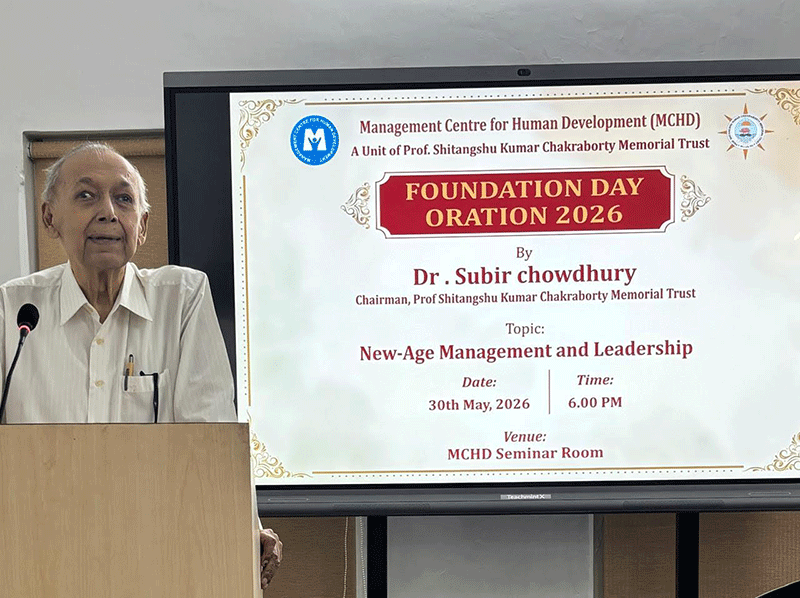
Speaking on the Foundation Day of the Management Centre for Human Development (MCHD), a unit of the Prof. Shitangshu Kumar Chakraborty Memorial Trust, Dr. Chowdhury, who is also the Chairman of the Trust, argued that contemporary management practices should draw upon India's spiritual traditions to create more humane, sustainable and effective leadership models.
"We are overwhelmed by a Western thought process that places excessive emphasis on material success and consumer culture," he said, warning that societies risk losing their moral compass when material aspirations become the sole measure of progress.
Dr. Chowdhury stressed that spiritual and material prosperity need not be contradictory goals. "Spiritual and material prosperity can go hand in hand," he said, provided individuals learn to regulate their desires and cultivate self-discipline.
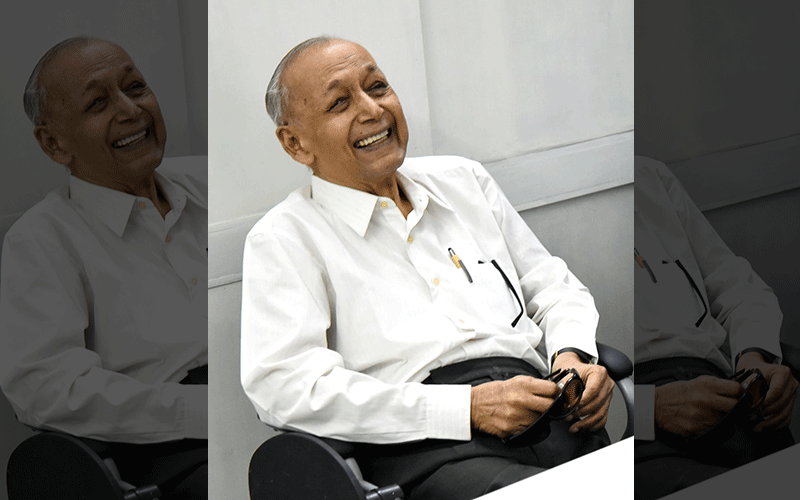 Dr Chowdhury at a candid moment at the MCHD foundation day. Photo: Druba Haldar/MCHD
According to him, the essence of new-age management lies in self-mastery. Leadership, he said, should be grounded in spirituality, enabling individuals to exercise "control over self in order to lead and manage organisations effectively."
The management thinker also expressed concern over what he described as the gradual erosion of traditional values. Referring to a growing disconnect from cultural roots, he said India's value system was steadily weakening and becoming increasingly alienated from everyday life.
To illustrate his ideas, Dr. Chowdhury presented a series of case studies highlighting organisations and leaders whose success, he argued, stemmed from strong values and a larger social purpose.
One such example was the Ramakrishna Mission, founded by Swami Vivekananda in 1897. Dr. Chowdhury noted that the organisation has sustained its relevance and credibility for more than a century by remaining firmly rooted in the ideals of Vedanta and the principle of "Shiva Jnane Jiva Seva"—serving humanity as a form of worship.
He observed that the Mission's enduring legacy demonstrates how institutions guided by clear values and a spirit of service can remain resilient across generations.
Dr. Chowdhury also cited the example of Verghese Kurien, widely regarded as the Father of India's White Revolution. He highlighted Kurien's leadership of Operation Flood, which transformed India from a milk-deficit nation into the world's largest milk producer.
According to Dr. Chowdhury, Kurien's achievements reflected the power of purpose-driven leadership, where organisational excellence was combined with a commitment to social transformation and national development.
The lecture resonated strongly with the audience, as Dr. Chowdhury explored the convergence of new-age management, spirituality and the Rajarshi Leadership model—a concept that combines the qualities of an effective leader with the wisdom, ethical grounding and inner discipline of a sage.
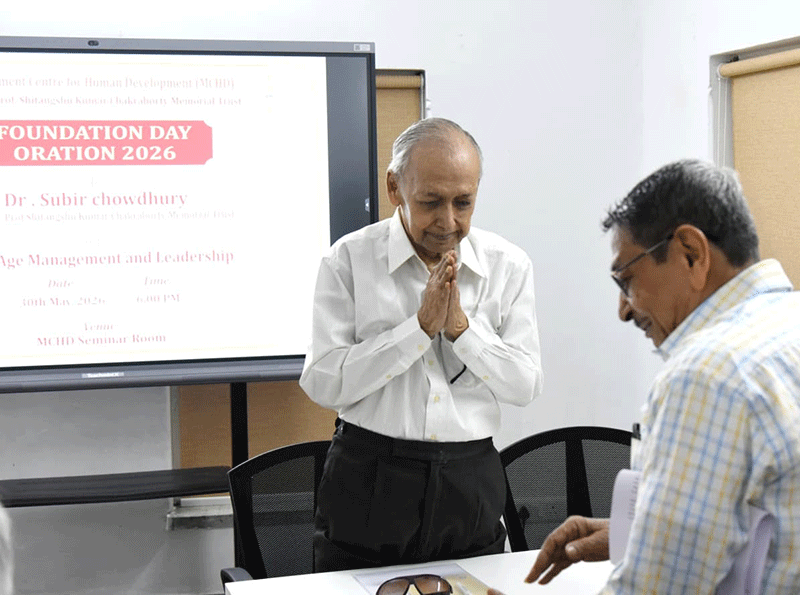 Dr. Subir Chowdhury with Dr Shib Narayan Sen at the MCHD event. Photo: Druba Haldar/MCHD
The programme concluded with an insightful vote of thanks by noted scientist, dharmasastra scholar and managing Trustee Dr. Shib Narayan Sen, who reflected on Prof. S. K. Chakraborty's seminal work, Education in India: A Tree Without Roots, reiterated the continuing relevance of value-based education in contemporary society.
About MCHD
The Management Centre for Human Development (MCHD) is a specialised unit of the Prof. Shitangshu Kumar Chakraborty Memorial Trust, dedicated to promoting Human Values, Indian Ethos, Rajarshi Leadership, Stress management, Sustainability and Holistic Human Development.
Inspired by the vision and teachings of Prof. S. K. Chakraborty, MCHD seeks to blend spiritual wisdom with modern management practices through research, education, training programmes, lectures and dialogues. It aims to nurture ethical, value-based leadership and contribute to the development of individuals, organisations and society at large.