
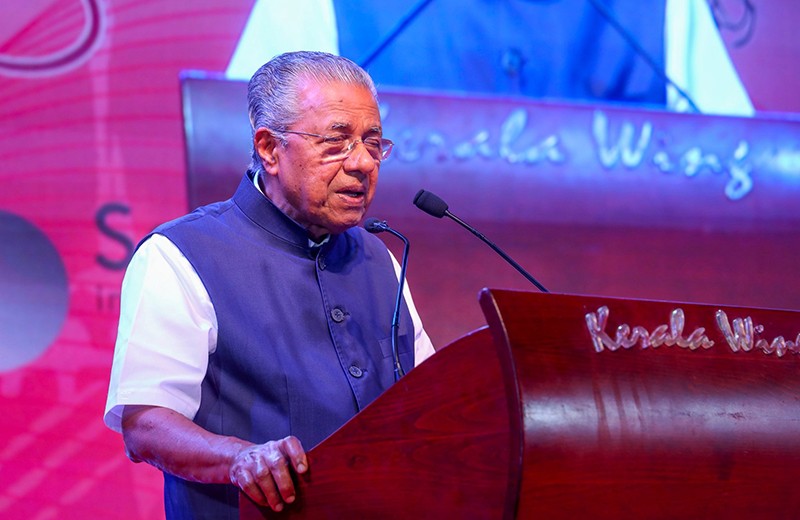
CM Vijayan made the landmark declaration during a special session of the Kerala Legislative Assembly convened to mark Kerala Piravi, the state’s formation day.
“Today’s Kerala Piravi marks a historic moment as we have succeeded in making Kerala the first Indian state free from extreme poverty,” Vijayan said in his address to the House.
“This Assembly has witnessed the passage of many transformative laws and policy declarations, and today it stands witness to yet another milestone in building a Nava Kerala,” he added.
The Chief Minister recalled that the eradication of extreme poverty was among the first key decisions taken by his Cabinet after assuming office in 2021, and fulfilling this pledge was one of the government’s major commitments to the people during the last Assembly election.
However, the Congress-led UDF opposition dismissed the declaration as “pure fraud” and boycotted the special session in protest.
How did Kerala make this possible?
Kerala — already celebrated as India’s first fully literate, digitally literate, and electrified state — undertook a series of targeted interventions to lift thousands out of extreme poverty.
With an investment exceeding ₹1,000 crore, the state rolled out welfare programmes that ensured daily food for 20,648 families, including 2,210 households receiving cooked meals, as well as medical assistance for 85,721 individuals and housing for thousands.
According to Vijayan, over 5,400 new homes have been built or are under construction, while 5,522 existing houses were repaired. Additionally, 2,713 landless families were provided with land to build their homes.
The government also helped 21,263 individuals obtain crucial identification documents such as ration cards, Aadhaar, and pensions — many for the first time — and supported 4,394 families through livelihood projects.
Rejecting a uniform welfare model, the government identified 64,006 vulnerable families and devised customised micro-plans tailored to each family’s specific needs.
“Instead of a one-size-fits-all approach, every family’s unique circumstances were studied to create personalised solutions,” Vijayan noted in a social media post.
A participatory, cross-party effort
Local Self-Government Minister M.B. Rajesh credited Kerala’s success to a transparent and participatory process under the Extreme Poverty Eradication Programme (EPEP), which implemented micro-level projects across the state.
He emphasised that the achievement was the result of coordinated efforts transcending political affiliations, with local bodies under both LDF and UDF administrations contributing to the mission.
Defending the government against opposition criticism, Rajesh said, “It’s not as if we woke up one morning and decided to declare Kerala free from extreme poverty. This result is the culmination of years of consistent, systematic work.”
Opposition boycott and political barbs
The special Assembly session, convened to mark the official announcement, quickly turned contentious.
Leader of Opposition V.D. Satheesan labelled the Chief Minister’s statement “pure fraud” and “a violation of House rules,” announcing that the UDF would boycott the session entirely.
“We cannot participate in a session that is based on deception,” Satheesan said before leading his party members out of the Assembly amid slogan-shouting.
Responding to the opposition’s allegations, Vijayan hit back sharply, saying the UDF was projecting its own conduct onto the government.
“When they say ‘fraud’, they are describing themselves,” he said. “We make promises we can fulfil — and we have fulfilled them. That is our answer to the opposition leader.”
Despite the walkout, the day’s proceedings marked what the government hailed as a historic achievement — a symbolic reaffirmation of Kerala’s long-standing commitment to social justice and inclusive growth, even as political divides continued to cast a shadow over the declaration.