
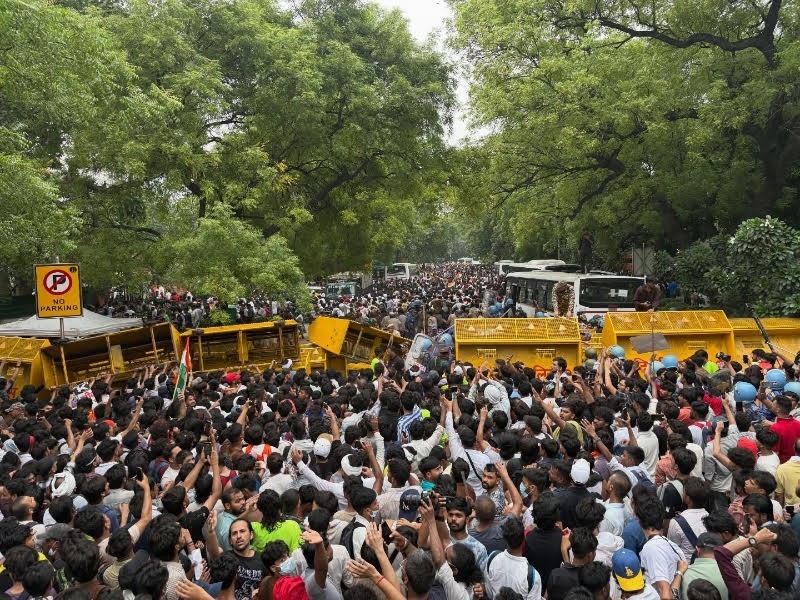
The decision follows the Centre's assurance to the protesters and comes days after the Supreme Court directed states not to take coercive action against demonstrators who have no prior criminal record.
However, the Delhi government's decision will not cover those with "criminal antecedents", in accordance with the Supreme Court's July 28 order.
13 cases registered over protests
According to a government notice issued on Thursday evening, the Delhi Police had registered 13 cases in connection with the protests by the evening of July 29.
The government said all arrests and detentions would now be reviewed and that there would be no further action against protesters who qualify under the order.
"The matter will be treated as closed and the release process will be carried out," the notice said.
Delhi Home Minister Ashish Sood said the government had honoured its commitment to the protesting students.
"We stand with the students, and it is in that spirit that we issued this order," Sood said.
"However, if any anti-social elements with criminal antecedents used the student protest as an opportunity to spread violence, action will be taken against them," he added.
Protests escalated after July 20
The arrests followed clashes between protesters and police during the CJP's 'Chalo Sansad' march from Jantar Mantar on July 20.
Police subsequently arrested several protesters and registered cases, using CCTV footage from the day to identify those allegedly involved in violence.
The government's decision comes after widespread outrage over the alleged use of excessive force against protesters, including the reported use of pellet guns.
CJP had threatened fresh protests
The withdrawal of legal action was one of the key demands of the CJP, which had been spearheading protests over the NEET paper leak controversy.
The group's principal demand was the removal of Education Minister Dharmendra Pradhan, along with action over alleged irregularities in competitive examinations.
The CJP called off its protests after receiving assurances from the government. However, two days later, it warned that it could return to the streets if police cases against protesters were not withdrawn.
The Supreme Court's July 28 order subsequently directed states not to take coercive action against protesters and to release those who had no prior criminal record.
Paper leak law faces tougher penalties
Meanwhile, the Lok Sabha has passed a bill seeking to amend the anti-paper leak law, proposing tougher punishment for offences related to examination paper leaks.
The proposed provisions include punishment of up to 10 years in jail and a fine of up to Rs 10 crore.
The latest move by the Delhi government is expected to pave the way for the release of protesters who have no previous criminal record and bring the legal cases arising from the demonstrations to a close.