
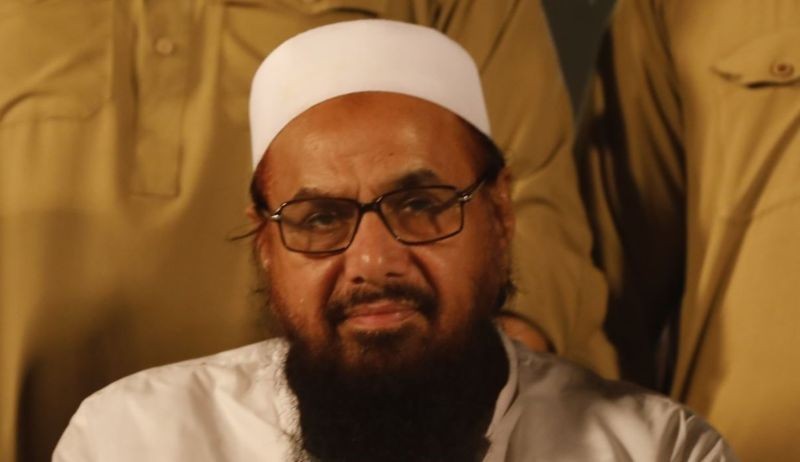
Madni made the claim while addressing a gathering associated with the banned terror organisation in Bahawalnagar on August 14.
The remarks came after Madni, who reportedly suffered a serious cardiac episode while delivering a Friday sermon earlier this month, returned to public appearances.
His claim has drawn renewed attention to Saeed’s alleged role in directing or facilitating terrorist activities targeting India, particularly in Jammu and Kashmir.
Hafiz Saeed's long-standing terror links
Saeed is the founder of Lashkar-e-Taiba, a Pakistan-based terrorist organisation that has been accused of involvement in several major attacks against India.
The United Nations sanctioned LeT in 2005 over its links to Al-Qaeda and the Taliban.
The United States subsequently designated Saeed under its global terrorism framework in 2008.
Saeed's name has also featured prominently in Indian investigations into several major terror cases, most notably the 26/11 Mumbai attacks.
The latest claim by Madni adds another allegation concerning the scale of LeT's activities in Kashmir, although the figure of 10,000 cited by the cleric remains his claim.
Saeed named in Pahalgam terror case
Saeed has also been linked by Indian investigators to the April 2025 terror attack in Pahalgam, Jammu and Kashmir, in which 26 people, most of them civilians, were killed.
Earlier in July, a Jammu court issued a non-bailable warrant against Saeed in connection with the Pahalgam terror attack case.
Separately, Mumbai Police have initiated proceedings for an in absentia trial against six Pakistani nationals accused of involvement in the 26/11 case and currently absconding.
The proceedings are aimed at allowing the legal process to continue against accused persons who are not available before the court.
26/11 attacks remain a major case against LeT
The November 2008 Mumbai attacks remain among the most significant terror cases associated with LeT.
On the night of November 26, 2008, 10 terrorists entered Mumbai by sea and launched coordinated attacks at multiple locations across the city.
The assault continued for four days and killed 166 people, while around 300 others were injured.
The attackers targeted several prominent locations, including some of Mumbai's busiest public spaces, hotels and transport hubs.
The attacks triggered widespread international condemnation and led to a prolonged investigation into the planning, financing and support network behind the assault.
Saeed's name has repeatedly surfaced in connection with the case, although the latest comments by Madni constitute a separate claim regarding the alleged deployment of terrorists to Kashmir.
In absentia proceedings
The Mumbai Police have formally begun the process for conducting an in absentia trial against six Pakistani accused who remain outside India.
If the accused are convicted during the proceedings, they can be sentenced under Indian law.
Any punishment would become enforceable if they are subsequently brought within India's jurisdiction.
The legal proceedings form part of India's continuing efforts to pursue those accused of involvement in the 26/11 attacks.