
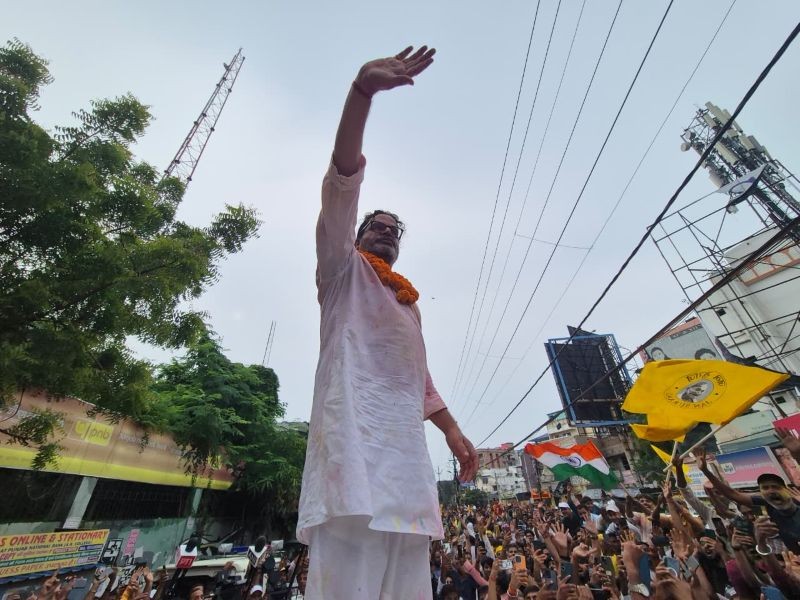
Former election strategist-turned-politician Prashant Kishor's demolition of a long-standing BJP fortress has sparked debate over whether the Jan Suraaj Party (JSP) chief's convincing win in the Kayastha-dominated constituency signals the beginning of a political shift in Bihar—a state long plagued by migration, unemployment and underdevelopment.
A defeat by more than 19,000 votes in a by-election, which conventionally favours the ruling party, has also raised questions over whether Bankipur has sounded an alarm for the BJP, already grappling with challenges including the recent NEET paper-leak controversy that led to the viral Cockroach Janata Party (CJP) challenge and resignation of Union Education Minister Dharmendra Pradhan.
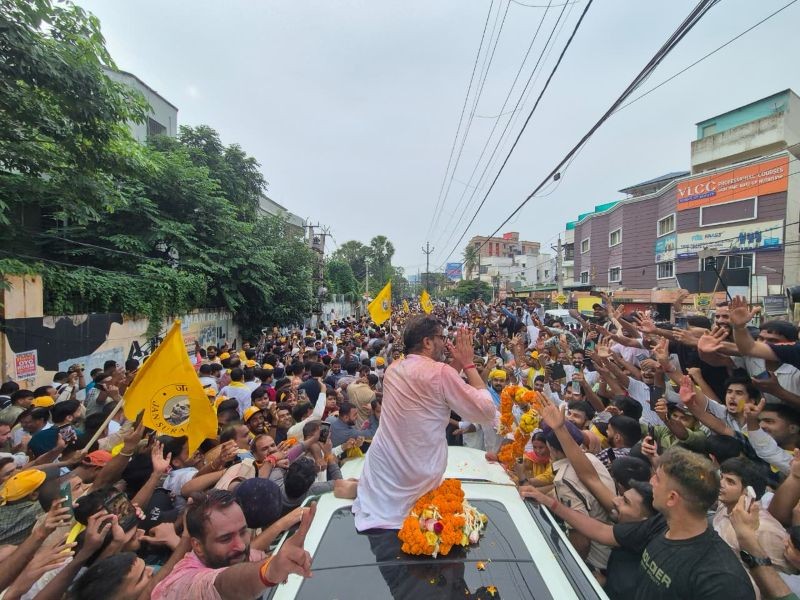 Prashant Kishor celebrates with supporters after defeating the BJP in Bankipur.
A verdict against the BJP's leadership?
Celebrating his maiden electoral victory, Kishor said the people of Bankipur had delivered a clear verdict against the BJP's leadership in Bihar.
"The people of Bankipur have sent a clear message to the BJP leadership that they want a Chief Minister with a better image than Samrat Choudhary," he told reporters after the result.
Throughout the campaign, Kishor repeatedly targeted Chief Minister Samrat Choudhary, questioning his suitability for the top post.
Speaking to ABP News before polling, Kishor had said: "As a Bihari, I feel ashamed to have a Chief Minister who has lied about his age, education and stayed in jail for murdering seven people."
He had also appealed to voters by saying: "The Bankipur result would not alter the government, but people who want to force the BJP to change its Chief Minister should vote for me."
The post-Nitish challenge for the BJP
The bypoll assumed significance because it was the BJP's first major electoral test after Nitish Kumar's exit from Bihar politics.
Following the NDA's emphatic victory in the 2025 Assembly elections, two major political developments reshaped Bihar politics:
- Nitish Kumar stepped away from state politics.
- Samrat Choudhary became the BJP's first Chief Minister of Bihar.
- For over two decades, the BJP had played second fiddle to the JD(U), with Nitish Kumar remaining the NDA's principal face in the state.
Bankipur therefore became the BJP's first attempt to prove it could retain its political dominance without relying on Nitish Kumar's personal appeal.
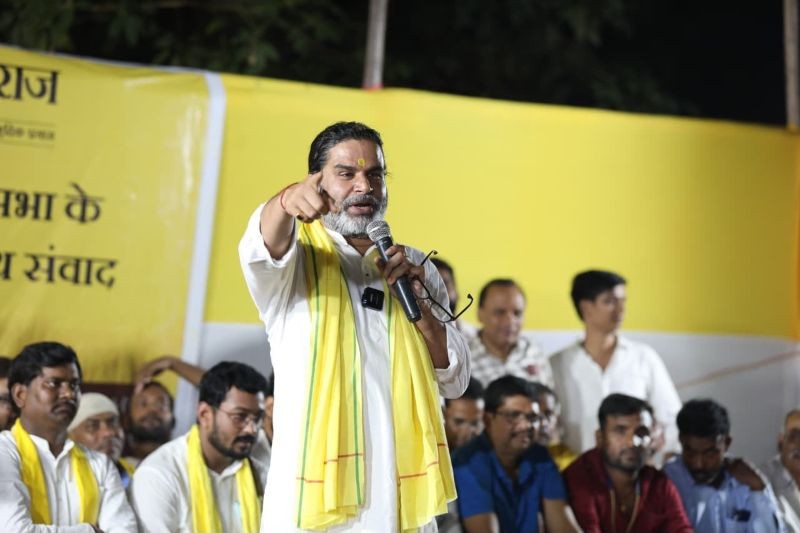 Prashant Kishor during a poll rally in Bankipur.
Questions surrounding Samrat Choudhary
Although Nitish Kumar's exit had been widely anticipated because of concerns over his public appearances and health, Samrat Choudhary's elevation surprised many observers.
His tenure has also not been free from controversy.
Soon after taking oath in April, opposition leaders mocked him after videos circulated claiming he stumbled while reading the oath of office. While largely dismissed as a political embarrassment, it added to early scrutiny of his leadership.
His government later faced criticism following the controversial police encounter of Bharat Tiwari in Bhojpur. In response, Chaudhary ordered a judicial inquiry, although the Opposition accused the government of encouraging excessive police action.
Opposition parties have also revived older controversies surrounding the Chief Minister, including:
- the 1999 "underage minister" controversy that forced his resignation,
- alleged inconsistencies regarding his age in official records,
- his multiple party switches—from the RJD to JD(U), then HAM and eventually the BJP—which critics cite as political opportunism.
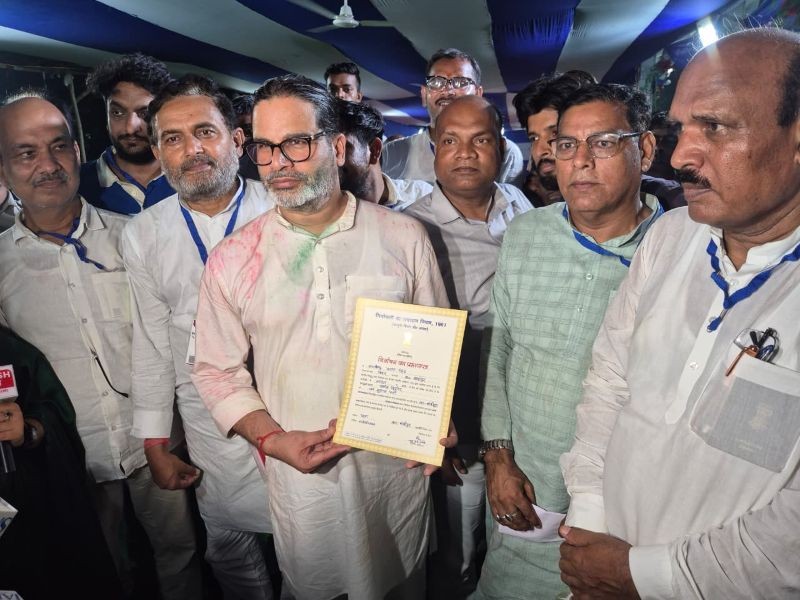 Prashant Kishor receiving the winning certificate.
Prashant Kishor's campaign: Beyond anti-BJP politics
Unlike conventional opposition campaigns, Kishor did not limit himself to attacking the BJP.
Instead, he framed the election as a referendum on Bihar's entire political establishment, targeting both the BJP-led NDA and the RJD.
His campaign revolved around four broad themes:
- employment and migration,
- education reforms,
- clean governance,
- replacing caste politics with development politics.
This differentiated Jan Suraaj from both the NDA and the RJD.
Filling Bihar's political vacuum
The RJD's rout in the 2025 Assembly elections and its poor performance in Bankipur suggest that Kishor may have begun occupying the political space left vacant by a weakened opposition.
Many voters appear reluctant to support the return of the Lalu Prasad Yadav-led political establishment, often associated by critics with corruption and poor governance.
Senior journalist Arati R. Jerath, speaking to Barkha Dutt on Mojo, said: "The Bankipur result shows people are ready to gamble with a new party or a new face, though Prashant Kishor is now a well-known figure.
"Firstly, people are fed up with the BJP and are therefore willing to try something new. Secondly, it shows people are ready to support leaders like Prashant Kishor or Vijay in Tamil Nadu if mainstream opposition parties do not change their narrative."
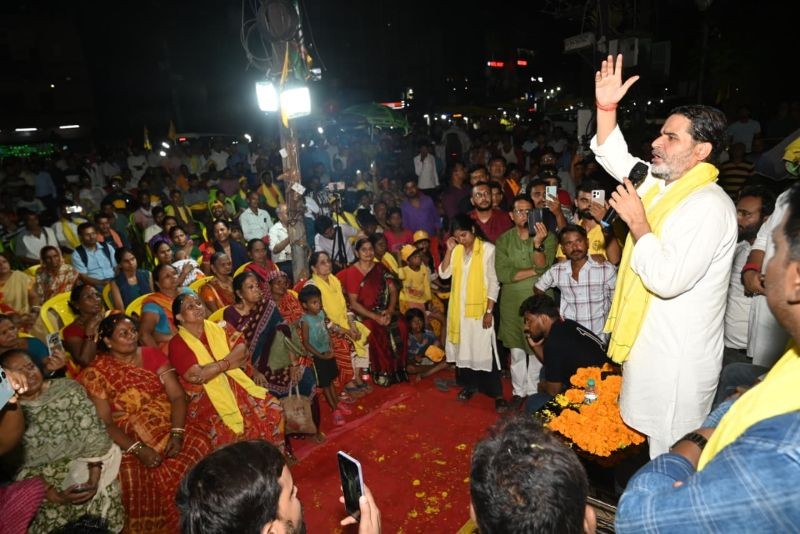 Prashant Kishor during his campaign trail.
Did the NEET controversy help?
Kishor's campaign coincided with nationwide protests over the NEET paper-leak controversy, which culminated in Dharmendra Pradhan's resignation as Union Education Minister.
Given Bihar's large population of government job aspirants and competitive examination candidates, many analysts believe the protests may have influenced the political atmosphere.
Kishor himself acknowledged that the protests may have "created an atmosphere" but argued they were unlikely to have decisively influenced the outcome because of relatively modest youth turnout.
Did UGC protests help Kishor?
The nationwide protests over the alleged irregularities in the UGC examinations also formed part of the political backdrop to the Bankipur bypoll. Bihar, which has one of the country's largest populations of students and government job aspirants, witnessed significant participation in the demonstrations.
The protests amplified concerns over unemployment, examination transparency and the shrinking opportunities available to young people—issues that Prashant Kishor had consistently highlighted in his campaign.
While it is difficult to establish a direct electoral impact, the agitation arguably reinforced the broader anti-incumbency sentiment among sections of the youth and strengthened Kishor's narrative that Bihar needed a governance model focused on education, employment and institutional accountability.
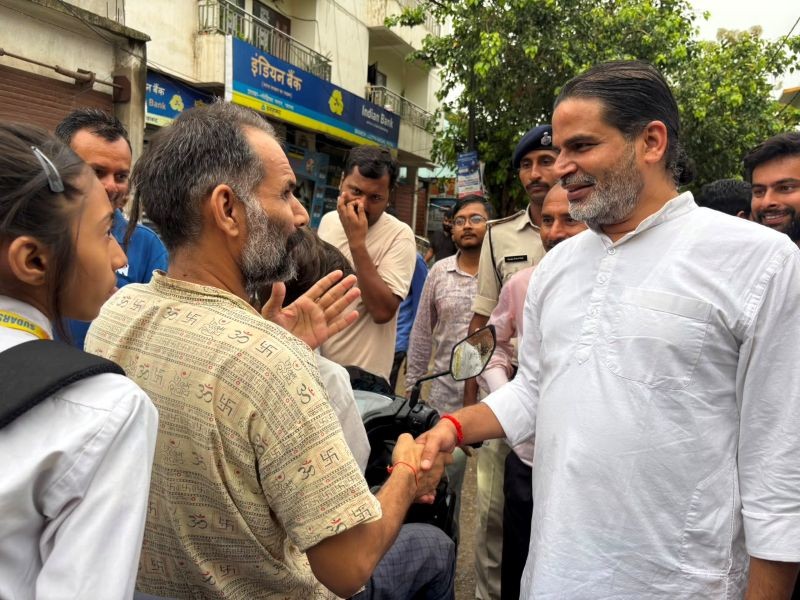 Prashant Kishor in a one-on-one interaction with voters ahead of the poll.
A wake-up call for the BJP
While one by-election does not threaten the BJP's position nationally, Bankipur exposes potential vulnerabilities.
The constituency had long been regarded as one of the BJP's safest urban seats.
Its loss suggests:
- educated urban voters are willing to experiment with credible alternatives,
- the BJP can no longer assume that its traditional support base will remain permanently loyal.
- More importantly, Kishor has demonstrated that a challenger focusing on governance, education and employment can compete even in BJP strongholds.
National implications
Prashant Kishor's victory does not immediately alter India's political balance.
However, it raises broader questions.
If governance-centric politics begins outperforming traditional identity-based politics, established parties—including the BJP—may need to rethink their electoral strategies.
The result also chips away at the BJP's aura of electoral invincibility.
For years, the BJP has been viewed as India's most formidable political machine. A first-time politician defeating the party in one of its bastions reinforces the idea that the BJP can be challenged by credible, issue-based campaigns.
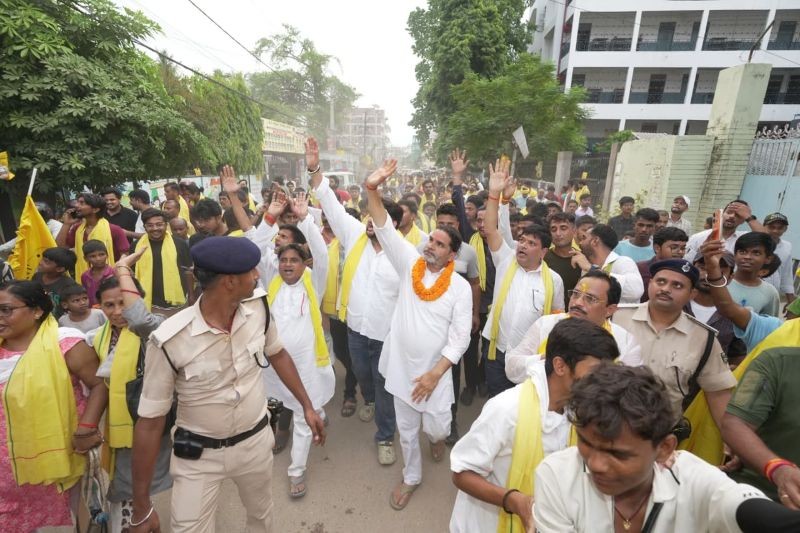 Prashant Kishor waves at voters in the run-up to the election.
A morale boost for the Opposition
Jerath believes the significance of Bankipur extends beyond Bihar.
"The BJP's defeat in Bankipur, along with its loss in Madhya Pradesh's Datia bypoll, is a huge moral booster for the Opposition and a massive dampener for the ruling party. The result also erodes Nitin Nabin's authority for failing to retain his family's traditional seat."
She added: "We now have to closely watch how the Opposition utilises these two victories, which come at a time when the BJP is on the defensive following the Gen Z protests."
(Photos: Jan Suraaj/X)