
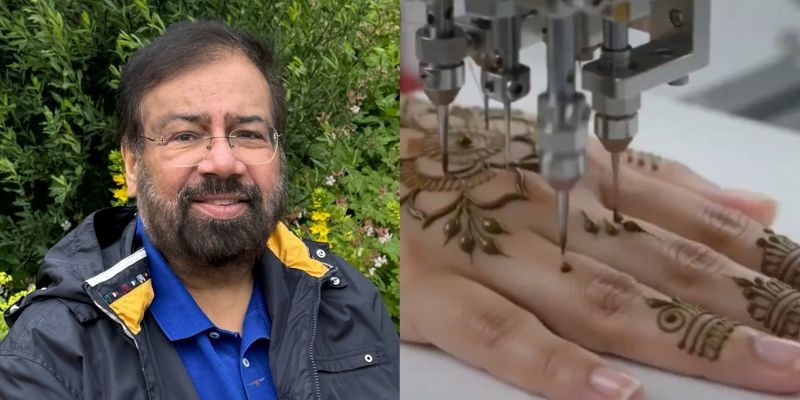
The concern over technology replacing human jobs was raised by industrialist Harsh Goenka, who shared a video showcasing the DHARA MEHNDI DESIGN robotic machine. The machine uses fine nozzles to apply intricate henna patterns on a person's hand within seconds.
Sharing the video on social media, Goenka wrote, “Some more jobs gone.”
Some more jobs gone pic.twitter.com/jKiUzB8gOA
— Harsh Goenka (@hvgoenka) September 9, 2026
Mehndi — an integral part of Indian weddings
Mehndi has long been an important part of Indian wedding celebrations, particularly during the traditional mehndi ceremony, where the bride, family members and friends come together for an evening of music, dance and festivities.
For brides, mehndi is often more than just a decorative element. Elaborate designs can incorporate floral motifs, traditional patterns, the groom's name or initials, and elements that reflect the couple's personal story.
The tradition has also created a sizeable ecosystem of professional mehndi artists, ranging from independent artists and local practitioners to specialists who travel across cities for weddings and large celebrations.
Can automation replace mehndi artists?
The emergence of robotic mehndi machines could potentially bring speed and consistency to the process. Such technology may appeal to large-scale weddings, exhibitions, corporate events and other occasions where several people need mehndi applied within a limited period.
A machine capable of producing intricate designs in seconds could also offer standardised patterns and reduce the time required for application.
However, the technology also raises questions about the future of traditional mehndi artists, particularly those whose livelihoods depend on customised designs and wedding bookings.
Technology vs the human touch
Unlike an automated machine, a professional mehndi artist can alter a design based on the client's preferences, hand shape and occasion. Artists can also create personalised patterns, combine different styles and make last-minute changes — elements that form an important part of the human experience surrounding Indian weddings.
For many families, the mehndi ceremony is itself a social and cultural experience, with the artist becoming part of the celebration rather than simply providing a service.
The rise of automation could therefore create a divide between speed and personalisation, with machines potentially handling simpler or high-volume applications while skilled artists continue to cater to clients seeking bespoke designs.