
The satirical online movement, which emerged following controversial remarks made by Chief Justice of India Surya Kant, has witnessed a massive rise in social media followers over the past few days.
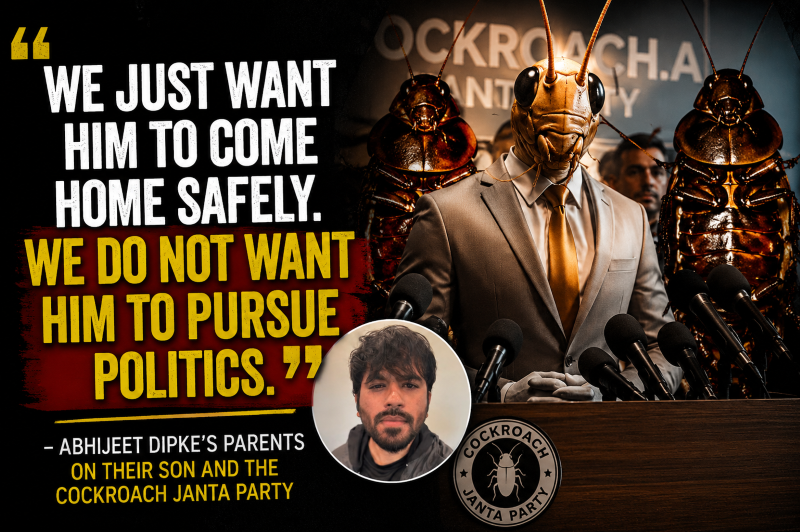
Speaking to a Marathi news channel, Dipke’s parents — Bhagwan Dipke and Anita Dipke — admitted they are anxious about the attention surrounding their son and the movement.
‘We Just Want Him To Return Home Safely’
“If we look at politics nowadays, fear is natural, no matter how many followers he has. In one of his interviews, he himself expressed fear of being arrested after returning to India. We read about such incidents in newspapers,” Bhagwan Dipke was quoted as saying by The Times of India.
Anita Dipke echoed similar concerns and said the family does not want their son to pursue politics.
“We just want him to come home safely. Whether he continues in politics will be his decision, but we do not want him to pursue it,” she said.
How The Cockroach Janta Party Went Viral
The Cockroach Janta Party began as a satirical online campaign after remarks made by Chief Justice Surya Kant during a court hearing sparked widespread outrage online.
The movement rapidly gained traction on social media and, according to several online users, even surpassed the follower count of the ruling Bharatiya Janata Party (BJP) on certain platforms.
The campaign has since fuelled speculation over whether it could evolve into a larger political force, although it currently has no organisational presence on the ground.
Foreign Follower Claims Trigger Debate
The sudden rise in the campaign’s popularity has also sparked questions online after claims surfaced alleging that a significant number of followers originated from countries such as Pakistan, Bangladesh, Saudi Arabia and Turkey.
Screenshots shared by social media users claimed that Indian users made up only a small portion of the audience interacting with the campaign.
However, these claims remain unverified.
Political Reactions Continue
While supporters of the campaign have described it as a symbolic youth protest against elitism and unemployment, critics have dismissed it as meme-driven activism and political propaganda.
Several political voices have also attempted to use the campaign to advance their own narratives, further intensifying the debate around the viral movement.