
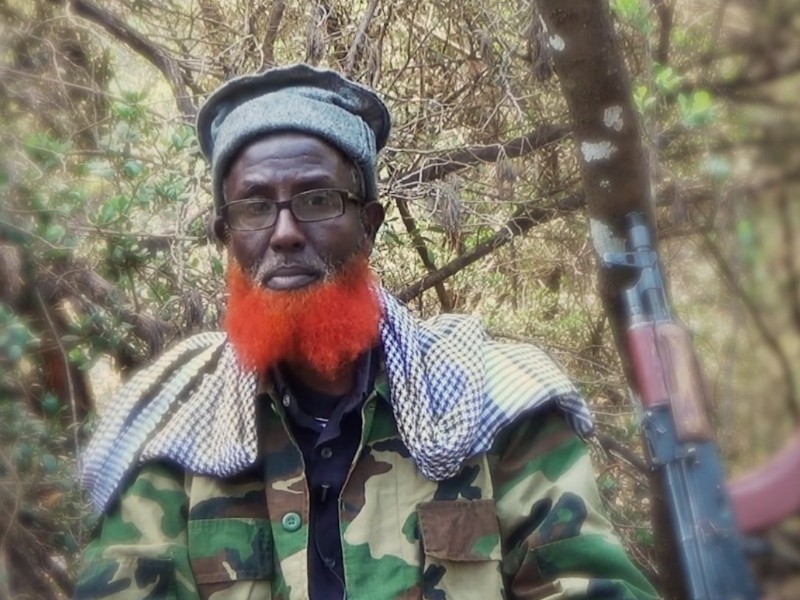
Yet Mumin’s path is distinct in one critical respect. At a time when the Islamic State’s so-called caliphate had been militarily dismantled in Iraq and Syria, he managed to carve out a new frontline for the organisation in one of the world’s most fragile regions—northern Somalia.
From the windswept caves of Puntland, Mumin now leads a branch of ISIS that intelligence agencies consider one of the movement’s most adaptive and resilient offshoots.
His rise has exposed gaps in counterterrorism oversight, highlighted the vulnerabilities of states confronting parallel insurgencies, and underscored how extremist networks survive by dispersing geographically when pressure mounts.
From London pulpits to Puntland mountains
Before his emergence as a jihadist commander, Abdul Qadir Mumin lived a markedly different life in the United Kingdom.
Arriving in London as a refugee in the 1990s, he became known within certain circles as a preacher with uncompromising views.
While his rhetoric attracted attention, it fell short of triggering legal action—a grey zone that counter-extremism officials have long struggled to address.
According to intelligence assessments, Mumin maintained contact with individuals later linked to extremist plots and networks.
MI5 monitored him intermittently, but the threshold for arrest or prosecution was never met.
Eventually, as scrutiny grew, he quietly left the country, telling acquaintances he was returning to Somalia to “teach” and “serve the community.”
Upon arrival, he initially joined the larger and more entrenched jihadist faction—al-Shabaab. But ideological divergences soon emerged.
While al-Shabaab maintained allegiance to al-Qaeda, Mumin gravitated towards the Islamic State’s message of global expansion and rigid centralisation. When ISIS’s propagandists declared their caliphate in 2014, Mumin became a vocal internal advocate for shifting loyalty.

The breakaway and an oath to ISIS
His turning point came in 2015, when he publicly defected from al-Shabaab along with a small band of followers in Puntland.
The declaration was filmed, circulated, and quickly endorsed by ISIS leadership in the Levant, which was at the time seeking to cultivate new franchises amid intensifying military pressure in Syria and Iraq.
Though initially dismissed by al-Shabaab as an insignificant splinter group, Mumin’s faction gained traction through strategic alliances, recruitment among marginalised youth, and exploitation of territorial vacuums in Puntland’s rocky highlands.
The region’s rugged geography—caves, narrow passes and steep escarpments—provided natural fortification, complicating Somali and regional attempts to dislodge the militants.
A new centre of gravity for a dispersed ISIS network
While the collapse of ISIS’s territorial caliphate in 2019 weakened the organisation globally, it also dispersed its operational centres. Fighters retreated into deserts, border regions and ungoverned spaces.
Somalia, with its patchwork of authority, competing security forces and entrenched insurgencies, proved a fertile environment.
Under Mumin’s direction, ISIS-Somalia has evolved into a hub connecting financial, logistical and propaganda pipelines for the broader organisation.
Western and regional intelligence assessments suggest that the branch collects revenue through extortion, taxation of remote communities, and controlling smuggling routes along the Gulf of Aden.
The group has been implicated in targeted assassinations, bombings and intimidation campaigns designed less to seize territory than to undermine local governance and maintain strategic relevance.
Its operational model differs from al-Shabaab’s insurgency: ISIS-Somalia focuses on high-impact violence, recruitment and transnational facilitation.
Mumin’s presence has amplified these capabilities.
Though he rarely appears in public, his recorded messages continue to circulate among sympathisers, portraying him as a steadfast commander who resisted both Western intelligence pressure and al-Shabaab’s retaliatory campaigns.
A persistent oversight challenge for MI5 and Western intelligence
Mumin’s path from London to Puntland has accelerated debates within British security circles about the monitoring of radical preachers and the difficulty of intervening before individuals manage to depart and embed within conflict zones.
His case is frequently cited in internal reviews examining how extremists leverage civil liberties protections to operate legally, only to become far more dangerous once beyond domestic jurisdiction.
There is no indication that Mumin engaged in direct operational planning while in the UK, but his ideological influence on certain networks has been referenced in analyses of radicalisation patterns in London’s Somali diaspora.
Once abroad, he slipped beyond the reach of British authorities, re-emerging in Somalia as a figure of global significance within the ISIS constellation.
Pressure and persistence in the Puntland highlands
Attempts to neutralise Mumin’s faction have produced mixed results.
Puntland’s security forces, supported at various times by US airstrikes and intelligence-sharing arrangements, have targeted ISIS positions in the Galgala mountains, temporarily dislodging fighters but failing to eliminate the leadership.
The group’s resilience stems from its mobility, reliance on small units, and ability to retreat into cave networks.
Moreover, local grievances—ranging from unemployment to clan marginalisation—continue to provide steady recruitment pools that ISIS and al-Shabaab compete to exploit.
The rivalry between the two jihadist organisations has resulted in intermittent clashes, though both share the broader strategic aim of undermining the Somali state.
ISIS-Somalia remains smaller than al-Shabaab, but its international linkages, financial channels and propaganda output grant it outsized influence.
A resurgent threat with global implications
Mumin’s evolution from a London preacher to the architect of a strengthened ISIS branch in East Africa illustrates how extremist movements adapt and regenerate.
Even as global counterterrorism attention shifts elsewhere, his faction demonstrates that the Islamic State continues to find footholds in regions where governance is fragmented and security institutions are overstretched.
From the caves of northern Somalia, Abdul Qadir Mumin now commands one of the most strategically relevant nodes in ISIS’s dispersed network—an unsettling reminder that the defeat of a caliphate does not necessarily equate to the defeat of the ideology that animated it.