
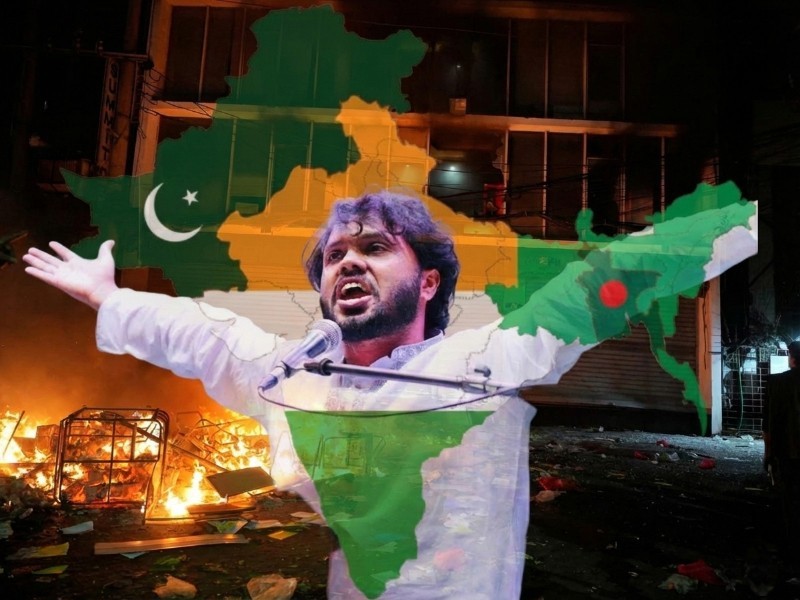
According to media reports, the accused have been identified as Faisal Karim Masud, 37, of Patuakhali; and Alamgir Hossain, 34.
They have been arrested from India, months after the Bangladeshi political leader was shot dead in Dhaka.
Police told India Today that the two accused had illegally entered India.
In a statement quoted by the news channel, the STF said: "There was secret credible information that two Bangladeshi nationals, after committing serious crimes including extortion and murder in Bangladesh, had fled their country and illegally entered India, and were trying to take shelter in the border area of Bongaon with the intention of crossing back into Bangladesh when an opportunity arises."
Acting on the tip-off, STF personnel raided the border region during the intervening night of March 7 and March 8 when the two suspects were arrested and taken into custody.
"During preliminary interrogation, it was revealed that Rahul alias Faisal Karim Masud, along with Alamgir Hossain, had committed the murder of Osman Hadi, a political activist of Bangladesh and then fled away," the statement said.
According to reports, the two suspects revealed during the interrogation that they had illegally entered India through Meghalaya and crossed multiple locations before reaching Bongaon.
Who was Osman Hadi?
Hadi, a senior figure associated with the "radical" platform Inquilab Mancha, died in Singapore after sustaining gunshot injuries in an attack in central Dhaka last year.
His killing had not only unsettled the Bangladeshi capital but also intensified debates around radical politics, nationalism, and Bangladesh’s fraught ties with India.
Hadi rose to prominence during the mass student-led uprising of mid-2024 that culminated in the ouster of long-serving prime minister Sheikh Hasina.
Within that movement, he gained recognition as a confrontational organiser who favoured uncompromising action over negotiation.
Inquilab Mancha, the group he helped shape, projected itself as a revolutionary force determined to dismantle the old political order.
While the movement drew energy from youth anger and disillusionment, critics repeatedly flagged its increasingly radical tone.
Despite its role in the uprising, the interim administration later disbanded the group, citing concerns over extremism.
‘Greater Bangladesh’ controversy
What set Hadi apart from many of his contemporaries was his overt hostility toward India.
He became widely known for promoting the idea of a so-called “Greater Bangladesh,” a concept that triggered outrage in New Delhi and alarm within sections of Bangladesh’s own political class.
Maps circulated by Hadi and his supporters depicted large parts of India’s northeastern region as Bangladeshi territory.
Though dismissed by mainstream parties as provocative fantasy, the imagery gained traction online and cemented Hadi’s reputation as an unapologetic anti-India ideologue.