
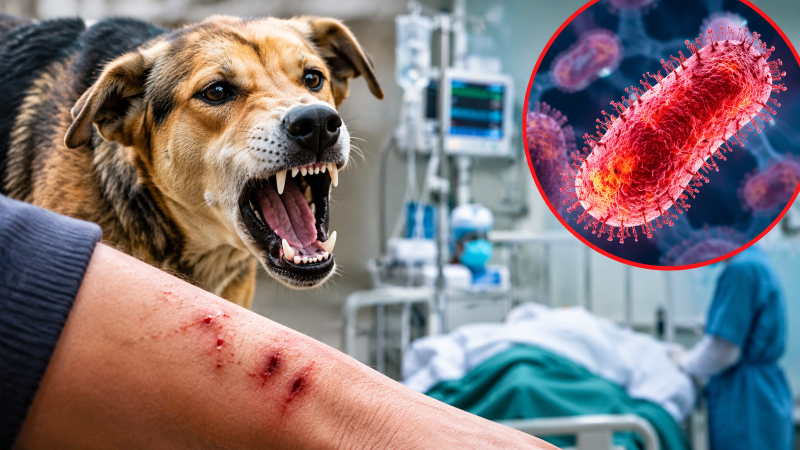
This is the second rabies-related death reported this month in Karachi involving patients from Jhal Magsi, Dawn News reported.
According to the newspaper, 20-year-old Irfan was brought to JPMC's emergency department on November 17 with fever, irritability, dysphagia (difficulty swallowing) and hydrophobia (fear of water) — symptoms associated with rabies after the virus affects the brain and central nervous system.
“The patient had a two-month-old history of a dog bite but could not get the post-exposure treatment,” a senior JPMC doctor told Dawn, adding that Irfan died within 12 hours of being admitted on the same day.
With this death, the number of rabies cases reported at JPMC has risen to 13, sources said.
More than 13,000 patients with dog-bite injuries have received treatment at the hospital.
Earlier this month, a 12-year-old boy from Jhal Magsi, Balochistan, was also brought to JPMC with clinical symptoms of rabies and was subsequently diagnosed with rabies encephalitis.
According to the World Health Organisation (WHO), rabies is a major public health concern, particularly in Asia and Africa. It is a viral zoonotic disease and a neglected tropical disease that causes tens of thousands of deaths every year, with children under the age of 15 accounting for 40 per cent of victims.
Dog bites and scratches are responsible for up to 99 per cent of human rabies cases, with the disease preventable through dog vaccination and measures to avoid animal bites.
However, once the rabies virus reaches the central nervous system and clinical symptoms develop, the disease is virtually always fatal.