
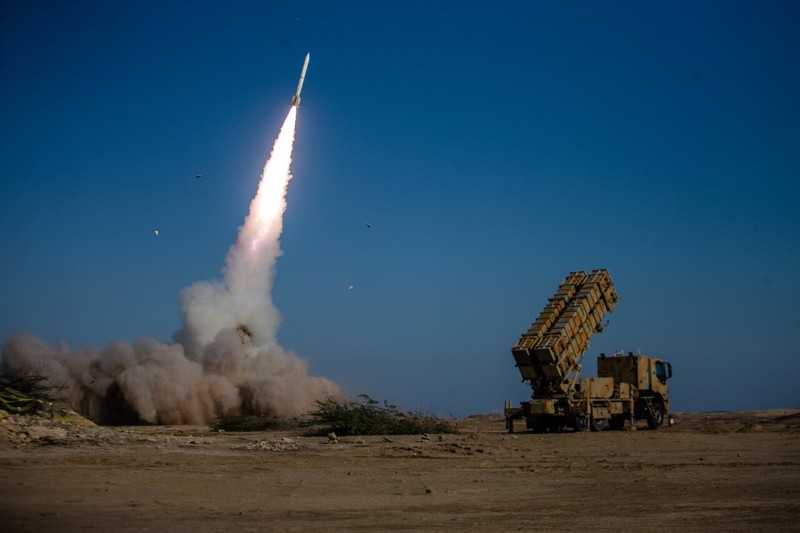
According to Iranian media reports, neither missile hit the target.
One reportedly failed mid-flight, while the other triggered a defensive response from a US warship, which launched an SM-3 interceptor.
The final outcome of the interception remains unclear.
Despite the lack of a confirmed strike, the attempt itself has drawn global attention.
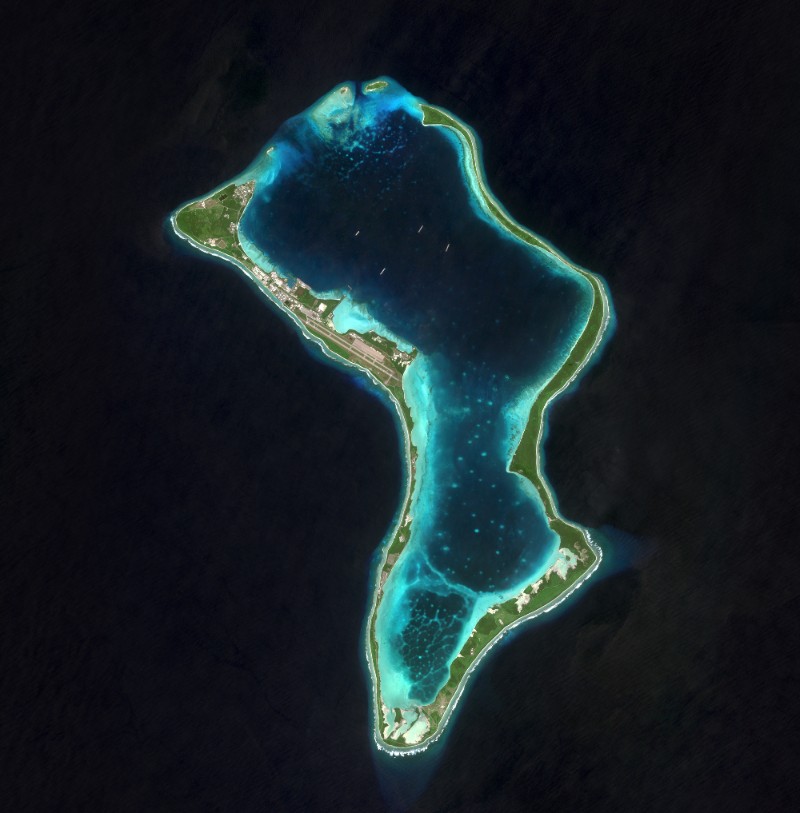 Diego Garcia, the largest island of the Chagos Archipelago in the Indian Ocean. Photo: Wikimedia Commons/European Space Agency/CNES
Range beyond declared limits
The most striking aspect of the incident lies in the distance.
Diego Garcia is located nearly 4,000 kilometres from Iran — roughly double the range Tehran has publicly acknowledged for its ballistic missiles.
Previously, Iranian officials, including Abbas Araghchi, had maintained that the country’s missile range was limited to around 2,000 kilometres.
This attempted strike challenges that narrative and suggests the possibility of undeclared capabilities.
Even if technically unsuccessful, the move signals that Iran may be testing systems closer to true intermediate-range ballistic missile (IRBM) thresholds.
Why Diego Garcia matters strategically
Diego Garcia is a critical node in US military operations.
The base supports long-range bombers, surveillance aircraft and logistics essential for projecting power across the Middle East and the Indo-Pacific.
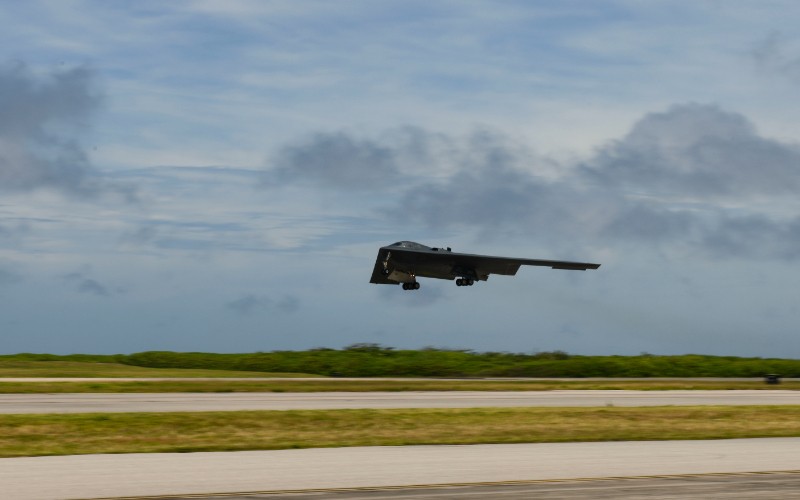 An American B-2 Spirit Stealth Bomber takes flight from a naval support facility in Diego Garcia. Photo: Wikimedia Commons/US Air Force
By targeting such a high-value installation, Iran has shifted the focus of the conflict beyond West Asia into the wider Indian Ocean region.
The move forces the United States to consider deploying advanced missile defence systems to more distant locations, potentially stretching its strategic resources.
Strategic impact beyond technical outcome
Defence analysts suggest that the political and strategic implications outweigh the technical results.
Even without a successful hit, Iran has demonstrated the ability to attempt long-range strikes against key Western assets.
By compelling the US to activate high-end interception systems, Tehran has effectively tested response times and defence readiness.
This creates uncertainty in military planning, as adversaries must now account for a broader and less predictable strike envelope.
Expanding theatre of conflict
The attempted strike comes amid rising tensions in the Strait of Hormuz and increasing confrontations involving US and allied forces.
The United Kingdom has already authorised US operations from regional bases under a collective self-defence framework.
British officials have condemned Iran’s actions as reckless, warning that expanding targets could deepen the crisis and disrupt global economic stability.
Meanwhile, Donald Trump criticised the timing of UK support, calling it delayed despite close bilateral ties.
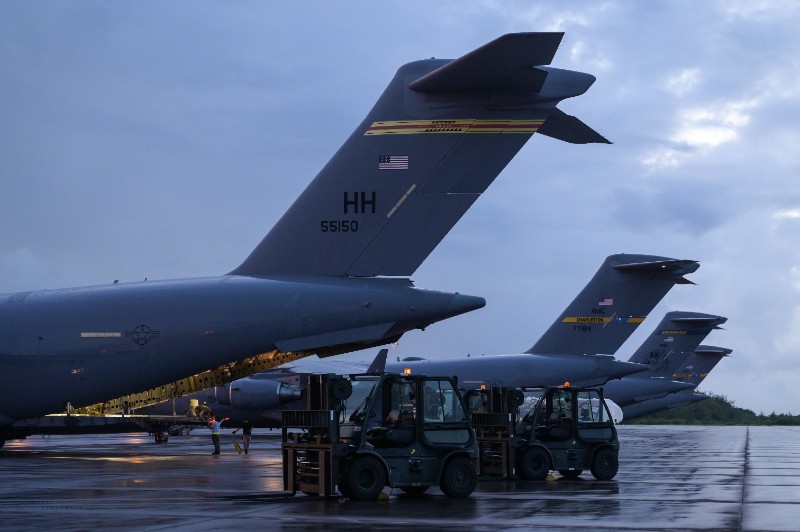 U.S. Air Force C-17 Globemaster IIIs at Diego Garcia, British Indian Ocean Territory. Photo: Wikimedia Commons/US Air Force
Pentagon reinforces regional presence
In response to the evolving threat, the Pentagon has moved to strengthen its military posture in the region.
Additional warships and thousands of Marines are being deployed to safeguard strategic sea lanes and reinforce allied positions.
These measures reflect growing concern over the potential expansion of the conflict zone.
Calculated demonstration of power
Iran’s attempted strike on Diego Garcia represents more than a military action; it is a calculated demonstration of reach and intent.
By signalling that even distant bases may fall within its operational scope, Tehran has introduced a new layer of uncertainty into global security dynamics.
Whether or not the missiles achieved their intended objective, the message is clear: the geographical limits of the conflict are shifting, and no strategic asset can be considered entirely beyond reach.