
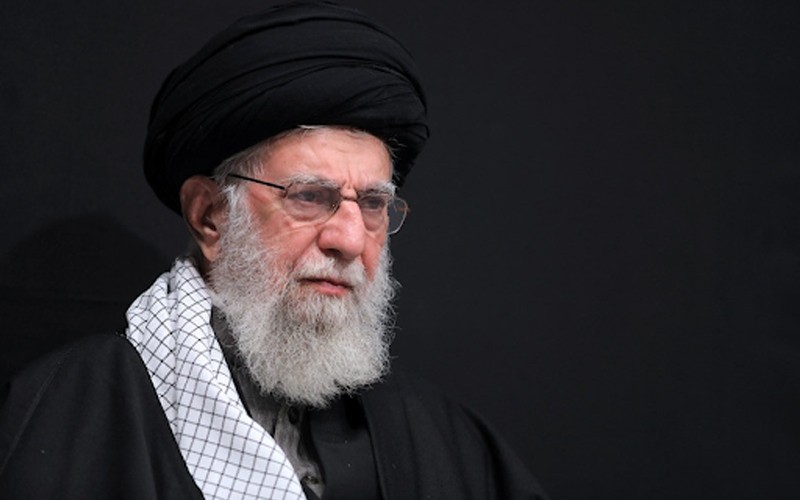
According to three Iranian officials familiar with his emergency protocols, the move is aimed at making it harder for adversaries to trace his whereabouts.
The officials said Khamenei is currently in a bunker and has designated successors across the military chain of command in case top officials are killed.
He has also identified three senior clerics as potential replacements for the supreme leadership if he is assassinated.
The report noted that these developments signal the gravity of the threat to Khamenei’s leadership, which has lasted more than three decades.
Israeli strikes, launched last week, have reportedly caused more destruction in Iran in just days than the country suffered during its eight-year war with Iraq in the 1980s.
In response, Iran has launched daily counterattacks, targeting sites in Israel including a hospital, an oil refinery in Haifa, as well as religious buildings and residential areas.
The Iranian officials, who spoke anonymously due to the sensitivity of the matter, said the leadership is preparing for various scenarios—including the possibility that US President Donald Trump may decide to join the war.
Khamenei, 86, is said to be aware that either the US or Israel might attempt to assassinate him, but he views such a death as martyrdom.
He has instructed the Assembly of Experts, the body responsible for selecting the next supreme leader, to swiftly choose a successor from the three names he has provided in the event of his death. Normally, this process takes months.
“The top priority is the preservation of the state,” said Vali Nasr, a professor at Johns Hopkins University, in comments to The New York Times. “It is all calculative and pragmatic.”
The Supreme Leader wields authority over Iran’s military, judiciary, executive, and legislative branches.
The officials clarified that Khamenei’s son Mojtaba is not among the candidates, nor is former president Ibrahim Raisi, who died in a helicopter crash in 2024.
Since the onset of the war, Khamenei has appeared in two recorded video messages.
In one of them, he declared, “The people of Iran will stand against a forced war.”
Israeli strikes have targeted Iranian military bases, nuclear facilities, and energy infrastructure, resulting in hundreds of deaths, including top commanders, along with civilian casualties.
Amid concerns over internal security, Iranian leadership also fears infiltration by Israeli operatives.
Mahdi Mohammadi, an adviser to the parliament speaker, said in an audio clip shared with The New York Times, “It is clear that we had a massive security and intelligence breach; there is no denying this.”
The Ministry of Intelligence has directed all officials to cease using phones and other electronic devices.
Senior leaders have been ordered to stay underground. Iran has also shut down international calls and restricted internet access.
Ali Ahmadinia, spokesperson for President Masoud Pezeshkian, said, “We are safeguarding the security of our country by shutting down the internet.”
Iran’s Supreme National Security Council has issued a warning that anyone found collaborating with the enemy must surrender by Sunday or face execution.
Tehran remains largely deserted, with checkpoints set up across the capital. Reformist politician Mohammad Ali Abtahi said, “The war has softened the divisions we had, both among each other and with the general public.”
Despite the crisis, many Iranians—including critics of the government—have rallied in support of the nation. Nobel Peace Prize laureate Narges Mohammadi told the BBC, “Democracy cannot come through violence and war.”