
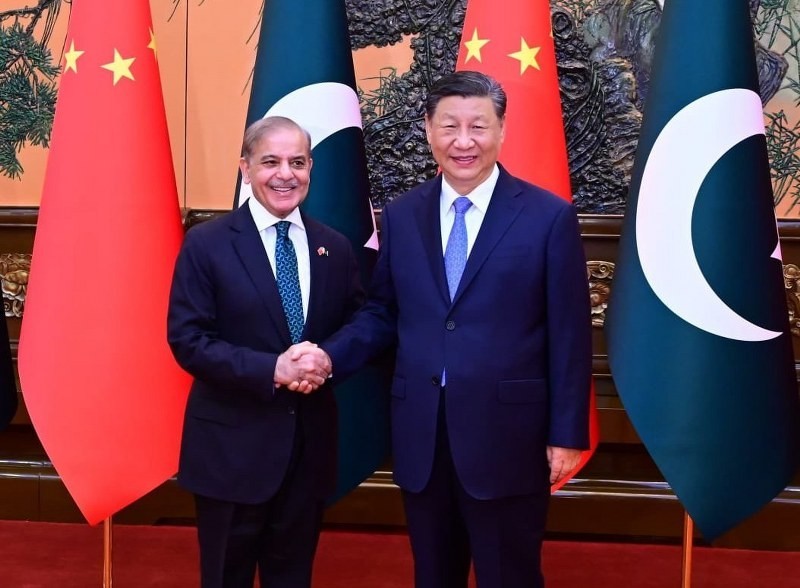
Discussions between Islamabad and Beijing are now at an advanced stage as both sides are convinced that a new organisation is need of the hour for regional integration and connectivity, diplomatic sources familiar with the development told The Express Tribune.
According to reports, the recent trilateral meeting between Pakistan, China and Bangladesh in Kunming was part of the diplomatic manoeuvres.
The meeting was attended by senior diplomats.
The ultimate goal of the meeting in Kunming on June 19 was to invite other South Asian countries, which were part of SAARC, to join the new grouping, the newspaper reported.
Will India be part of the new group?
Sources told The Express Tribune that India will be invited to join the new proposed forum.
The original SAARC group was comprised of India, Afghanistan, Bangladesh, Bhutan, the Maldives, Nepal, Pakistan and Sri Lanka.
The Pakistani newspaper reported claimed Sri Lanka, Maldives, and Afghanistan are expected to be part of the new group.
Indian news website Firstpost observed on the development: "While the initiative has yet to be officially announced, Indian officials are likely to view it as a bid to create a China-led counterweight to India’s influence in the region– a reversal of Saarc’s original vision, where India played a dominant role."
The last SAARC meeting occurred in 2014.
No meeting has taken place since then due to the ongoing India-Pakistan conflict.
India boycotted attending the SAARC meeting in Pakistan following a terror attack on an Indian Army camp in Uri in Jammu and Kashmir on September 18 that year.
The summit was called off that year after other SAARC nations like Bhutan, Sri Lanka and Bangladesh refused to participate in it.
History Of SAARC
The South Asian Association for Regional Cooperation (SAARC) was established with the signing of the SAARC Charter in Dhaka on 8 December 1985.
SAARC comprises of eight Member States: Afghanistan, Bangladesh, Bhutan, India, Maldives, Nepal, Pakistan and Sri Lanka.
The Secretariat of the Association was set up in Kathmandu on 17 January 1987.