
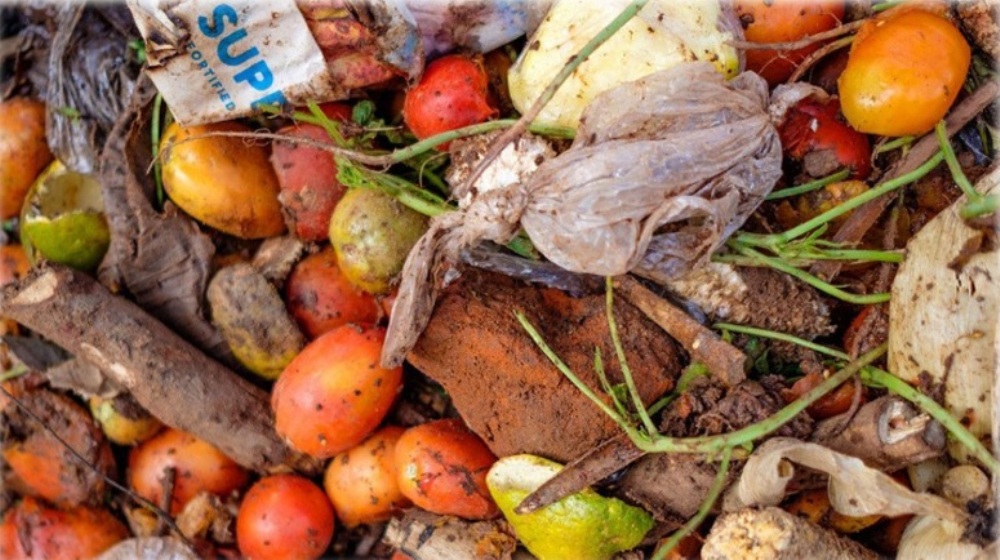
The UN Environment Programme’s Food Waste Index Report 2024 highlights that latest data from 2022 shows 1.05 billion tonnes of food went to waste.
Some 19 per cent of food available to consumers was lost overall at retail, food service, and household levels.
That is in addition to around 13 per cent of food lost in the supply chain, as estimated by the UN Food and Agriculture Organization (FAO), from post-harvest up to the point of sale.
‘Global tragedy’
“Food waste is a global tragedy. Millions will go hungry today as food is wasted across the world,” said Inger Andersen, Executive Director of UNEP, explaining that this ongoing issue not only impacts the global economy but also exacerbates climate change, biodiversity loss, and pollution.
Most of the world’s food waste comes from households, totalling 631 million tonnes – or up to 60 per cent - of the total food squandered. The food service and retail sectors were responsible for 290 and 131 million tonnes accordingly.
On average, each person wastes 79 kilogrammes of food annually. This is the equivalent of 1.3 meals every day for everyone in the world impacted by hunger, the report authors underscore.
Not just a ‘rich country’ problem
The problem is not confined to affluent nations. Following a near doubling of data coverage since the 2021 Food Waste Index Report was published, there has been increased convergence between rich and poor.
High-income, upper-middle income, and lower-middle income countries differ in average levels of household food waste by just seven kilogrammes per capita per year.
The bigger divide comes in the variations between urban and rural populations.
In middle-income countries, for example, rural areas are generally wasting less. One possible explanation is in the recycling of food scraps for pets, animal feed, and home composting in the countryside.
The report recommends focusing efforts on strengthening food waste reduction and composting in cities.
Waste and climate change
There is a direct correlation between average temperatures and food waste levels, the report finds.
Hotter countries appear to have more food waste per capita in households, potentially due to increased consumption of fresh foods containing fewer edible parts and a lack of robust refrigeration and preservation solutions.
Higher seasonal temperatures, extreme heat events, and droughts make it more challenging to store, process, transport, and sell food safely, often leading to a significant volume of food being wasted or lost.
Since food loss and waste generates up to 10 per cent of global greenhouse gas emissions – almost five times the total emissions compared to the aviation sector – reducing emissions from food waste is essential, UNEP expert believe.
Food for hope
There is room for optimism, the report suggests: public-private partnerships to reduce food waste and impacts on climate and water stress are being embraced by a steadily growing number of governments of all levels.
Examples include Japan and the UK with reductions of 18 per cent and 31 per cent respectively, showing that change at scale is possible, if food is rationed properly.
Published ahead of the International Day of Zero Waste, the UNEP Food Waste Index Report, has been co-authored with WRAP, a UK climate action NGO.
It provides the most accurate global estimate on food waste at retail and consumer levels, offering countries guidance on improving data collection and best practices, in line with the Sustainable Development Goal 12.3 of halving food waste by 2030.