
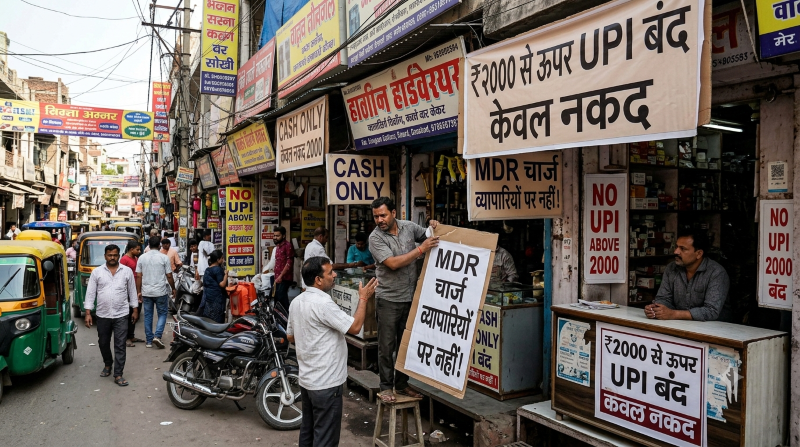
The new framework, which comes into effect from October 15, will impose a 0.4% MDR on specified person-to-merchant (P2M) UPI transactions above Rs. 2,000.
The charge will be borne by merchants and will be capped at Rs. 300 for transactions of Rs. 75,000 and above.
Ghaziabad traders put up 'cash only' notices
Traders in areas including Vijay Nagar, Pratap Vihar, Gaushala Fatak and Crossings Republic have reportedly displayed notices asking customers to carry cash for purchases above Rs. 2,000 from October 15.
Some shopkeepers have gone a step further, putting up hoardings declaring that they will accept cash payments only.
The move comes amid growing concern among traders over the additional cost of accepting higher-value UPI payments.
Several traders said businesses operating on thin margins may find it difficult to absorb the charge.
#UPI Tax effect has started in market.................Countdown of Modi Gov has begun. pic.twitter.com/8htz8VrCvN
— Priyanshi for RaGa Die hard Messi Fan (@RaGakiDeewani) September 17, 2026
Why are traders opposing the new MDR?
Traders have questioned why they should bear an additional payment-related cost after already paying GST and meeting other business expenses.
The government, however, has maintained that the MDR will be borne within the merchant payment ecosystem and should not be passed on separately to customers.
Banks and payment platforms have also been advised to ensure that merchants do not impose an additional UPI charge on consumers.
Most UPI payments remain unaffected
The new MDR will not apply to person-to-person UPI transfers or person-to-merchant transactions of up to Rs. 2,000.
According to the latest framework, more than 95% of P2M UPI transaction volume falls within the Rs. 2,000 threshold and will continue without MDR.
The development has also triggered concerns among traders in Delhi and other parts of the National Capital Region, with sections of the trading community seeking a review of the new framework.