
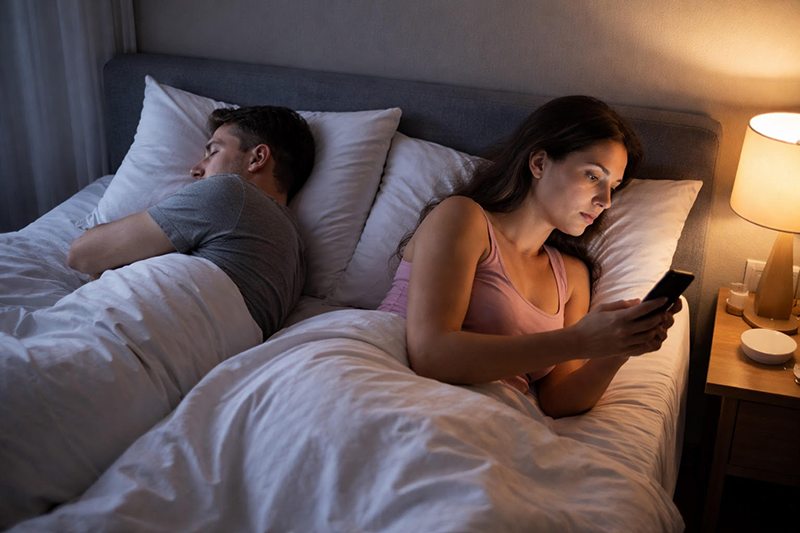
The traditional imagery of a successful marriage is a shared bed symbolising intimacy. However, for many modern couples that shared mattress can become a battlefield, with weapons like snoring, restless legs and stolen covers. No wonder ‘sleep divorce’ is a term finding a place in regular conversations today without even evoking a gasp. Some time ago it would have sounded sacrilegious.
Today, choosing to sleep in separate rooms isn’t necessarily a sign of a relationship in crisis; instead, it is an attempt to prioritise health and emotional harmony. In fact, the French have long said it is a civilised way to keep a marriage going after the first flush of matrimonial bliss wears off.
“For decades, the idea of separate bedrooms was considered something only older couples opted for due to health reasons, or it was seen as a precursor to actual divorce. It was viewed as a loss of intimacy or a sign that the spark had died. However, the modern perspective is shifting toward a more functional view of the home,” says Shradha Khurana, a 50-year-old banker who likes to wake up fresh after getting her quota of sleep.
“A small little noise disturbs me, and the fog of fatigue the next day worries me,” she says, adding, “A sleep divorce doesn't mean a lack of affection. It means acknowledging that the bed serves two distinct purposes—intimacy and rest.”
“We all have hectic schedules and want peaceful slumber. Some like watching late-night soaps, some snore, and some make phone calls. It’s not a failure; it’s a necessity today to get rest,” says senior citizen Damodar Kartik.
It makes sense too. Today we personalise our diets and our digital feeds. Then what’s wrong if we personalise how we rest as well? By prioritising individual health, couples often find they have more energy, more patience and more love to give when they see each other in the morning.
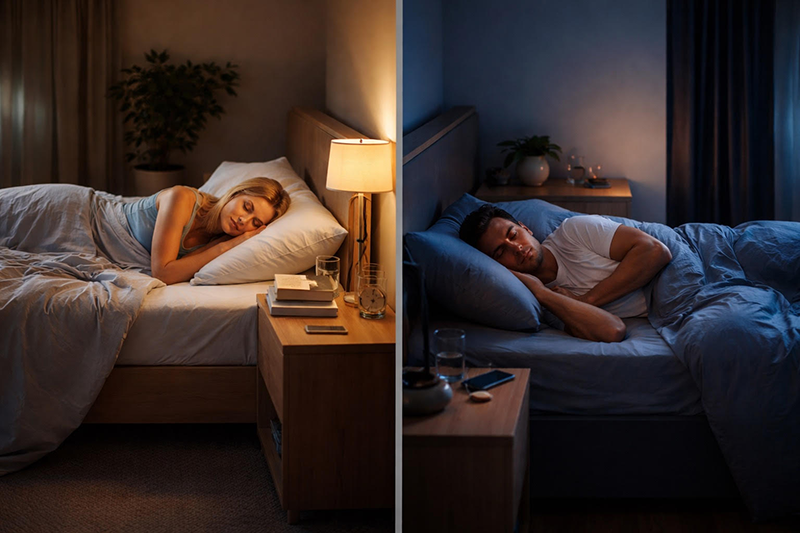 Couples choose separate bedrooms for a peaceful night while keeping their relationship strong. Photo: AI-generated
“Sleep is not a luxury; it is a critical physiological process. When one partner suffers from sleep apnoea or insomnia, the other partner’s sleep quality inevitably suffers. Sleep deprivation leads to irritability and poor communication,” says Shruti Brahma, 28, a homemaker.
Psychologists point out that resentment may set in towards a partner if one feels exhausted due to lack of sleep.
“By separating the sleeping environment, couples can ensure that both individuals reach the restorative stages of deep sleep,” says Najma Ahmed, a sleep psychologist in New Delhi.
Many couples think this arrangement—sleeping separately—strengthens the bond rather than breaking it. They vouch for separate beds or rooms, if possible.
As one such woman, who declines to share her name, says: “We spend evenings together watching movies, talking or being intimate, and only go our separate ways when it’s time to retire for the night.”
Then there are couples who go a step further and stay in different apartments while living in the same city. That’s not sleep divorce, though. They prefer to live separately yet do not want to get a divorce.
This arrangement is often referred to as ‘living apart together’. Unlike sleep divorce, it is a conscious decision to maintain two separate households while remaining in a committed relationship.
“Living apart together is a committed lifestyle where partners maintain separate homes to preserve their independence, avoiding the friction of mundane daily routines,” says Ahmed. “It turns their time together into a deliberate choice, ensuring the relationship remains romantic rather than becoming a purely functional roommate dynamic.”
Of course, it can irk parents.
“I don’t get it. The message I get is one of dysfunction. If they don’t stay together, they should split and look for different partners,” says an aghast mother of a 40-year-old son.
Speaking to couples who have made this choice, it seems they are afraid of losing their individual identities when they become part of a ‘we’. For them, togetherness becomes a conscious choice—exciting like a date rather than a default setting.
For people who hold high-stress jobs, or simply need solitude, having a personal sanctuary is vital. When they are with their partners, they can give full attention and be emotionally available rather than feel drained.
So perhaps it’s time to share a heart—and not necessarily a hallway—to keep the spark alive.