
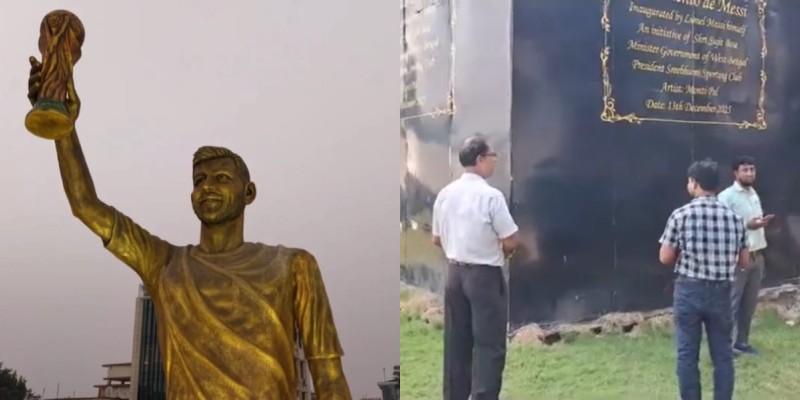
Authorities launched the inspection following complaints from local residents, who alleged that the giant structure had started “swaying” during strong winds.
Officials from the Public Works Department (PWD) inspected the statue on Monday after police forwarded complaints received from residents near the installation site in Lake Town.
According to sources within the administration, engineers found “structural deficiencies” in the massive structure and noted that its centre of gravity appeared to be unstable.
The report reportedly warned that the statue could become dangerous during the approaching monsoon season.
Sources added that authorities have now decided to remove the structure at the earliest to prevent any possible accident.
'Swaying in winds'
The complaint, reportedly lodged at Lake Town Police Station, claimed the statue visibly shook whenever strong winds swept through the area.
Some residents allegedly requested immediate repairs, while others demanded that the structure be relocated permanently.
An official present near the statue site told reporters that the structure appeared unstable from the lower section upwards.
He claimed the statue shook noticeably and suggested that cracks may have developed beneath the base structure.
The statue stands near the Lake Town Clock Tower and was unveiled on December 13, 2025, during Messi’s visit to Kolkata for his GOAT India tour.
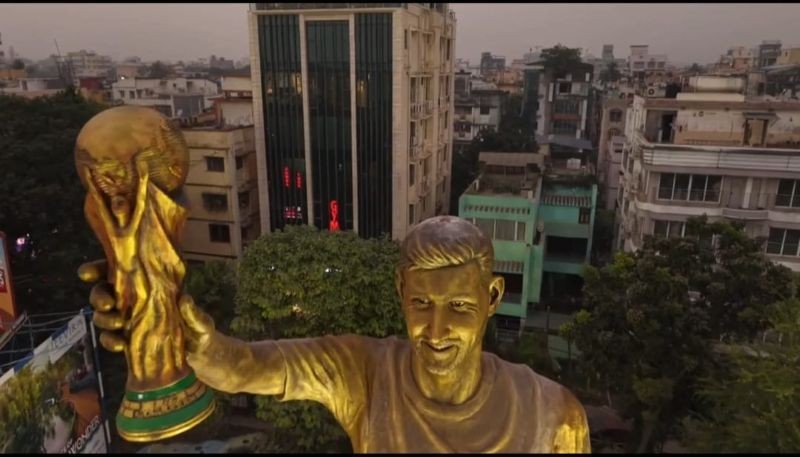 Photo: IBNS
The structure depicts Messi holding the FIFA World Cup trophy and quickly became a major attraction for football fans and visitors.
Constructed using an iron framework and fibreglass, the statue was reportedly completed in just 40 days by artist Monty Paul and his team.
The latest development comes only days after another controversial football-themed sculpture outside Salt Lake Stadium was removed.
Mamata Banerjee had reportedly designed that 30-foot installation.
The removal of the Salt Lake sculpture and the possible demolition or relocation of the Messi statue have triggered renewed discussion around large-scale public installations in Kolkata.
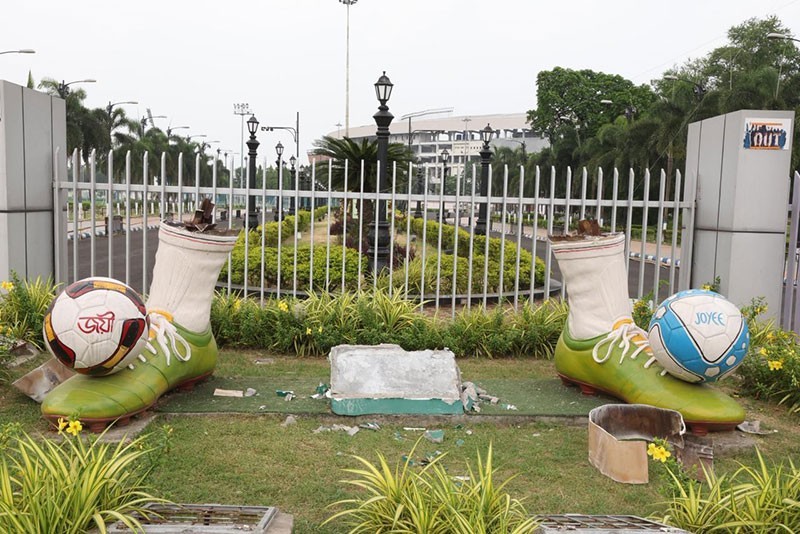 Photo: Avishek Mitra/IBNS
Sources also claimed that the PWD informed authorities that no no-objection certificate had been obtained before installing the statue on land allegedly under its jurisdiction.
The issue has added another layer to the controversy surrounding the installation.
The statue had already attracted criticism immediately after its unveiling, with several football fans joking online that the sculpture did not closely resemble Messi.
Kolkata eyesores
Kolkata had long suffered from a peculiar civic embarrassment — its public statues. Across the city, parks and traffic islands are dotted with odd, disproportionate sculptures that often look more like unintended caricatures than tributes.
From a footballer without a head to figures with limbs shaped like melted wax, these installations have become running jokes for locals.
Even icons like Rabindranath Tagore haven’t been spared: several of his statues, with their awkward poses and distorted expressions, routinely turn into viral memes.
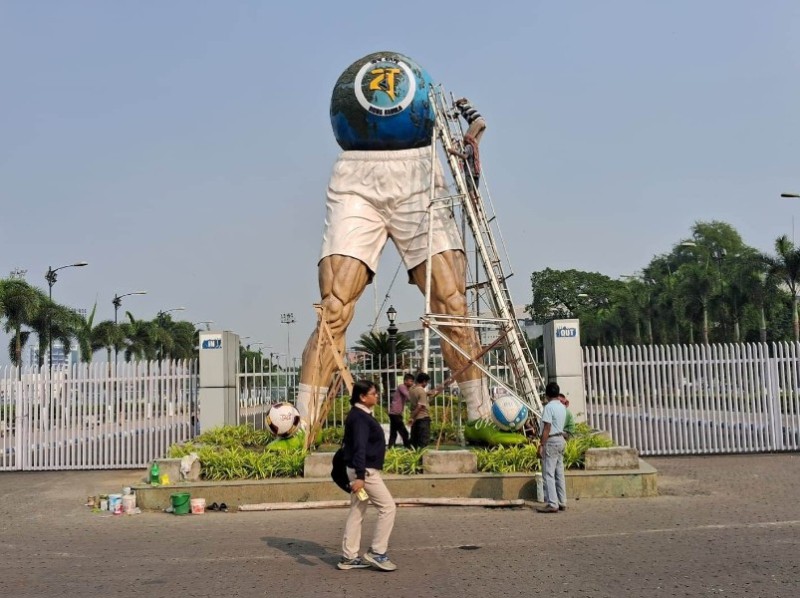 Photo: IBNS
Under the previous Mamata Banerjee government, the city had seen a surge in amateurish beautification drives.
While the intention had been to energise public spaces, the execution often fell flat when it came to sculptures.
The rush to install new statues, sometimes through local committees and low-cost contractors, resulted in inconsistent quality and bizarre artistic outcomes.