
I have a lot of respect for James Cameron, first introduced to me by Titanic in 1997. Like many, I found the film spellbinding — the range, the microscopic attention to detail to authenticate the period, and a love story written around the tragic sinking of the ship on its maiden voyage across the Atlantic in 1912.
His Avatar came in 2009 with the blue-tinted Na’vi inhabiting the extrasolar moon Pandora, carrying a strong message about environmental depletion through human intervention. Told through high-tech computer imagery and boundless imagination, it went on to become one of Hollywood’s biggest grossers. The sequel, Avatar: The Way of Water, retained the core message but leaned more heavily on visual effects. However, the latest in the trilogy, Avatar: Fire and Ash, left me cold.
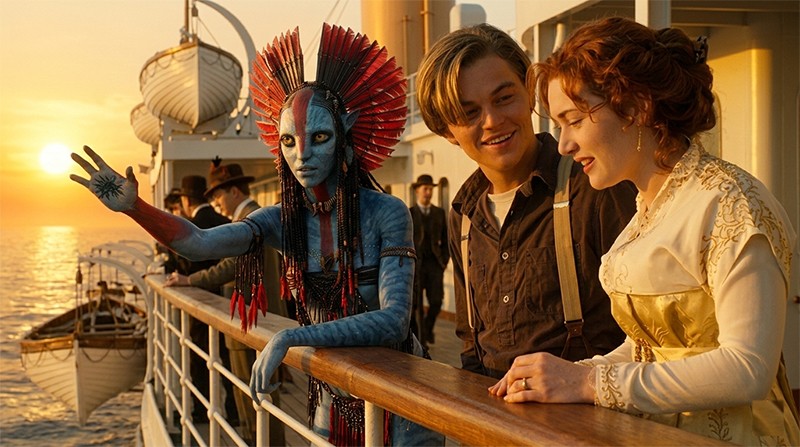
 Scene from James Cameron's Avatar: Fire and Ash, the latest in the trilogy. Photo: Disney Press
The three-hour-plus spectacle is high on technology and grand visuals but tedious, despite repeating the warning that if man’s greed challenges nature’s wisdom, ‘Mother Earth’ will strike back. It felt less like storytelling and more like spectacle for spectacle’s sake — generous in AI wizardry, but sparing in heart.
Perhaps film critic Roger Ebert said it best: when spectacle replaces story, audiences may admire the visuals but remain emotionally detached. He often reminded viewers that special effects are a tool, not a substitute for drama. A critic once wrote that if you check your watch during a film, you are either bored or unconvinced. For me, it was both.
 Scene from James Cameron's Avatar: Fire and Ash, the latest in the trilogy. Photo: Disney Press
This concern is not new. Iconic filmmaker Martin Scorsese famously described many modern franchise films as “theme park rides” rather than cinema, arguing that spectacle-driven movies often prioritise sensation over emotional or psychological revelation. Cinema, he insisted, is about human beings trying to convey lived emotional experiences — not merely visual thrills. Watching the latest tech-heavy blockbusters, I am inclined to agree.
Today, big studio movies — whether from Hollywood, Bollywood or down South — seem enamoured of AI-generated imagery, digital 3D and computer animation, as if action must triumph over storytelling. In India, mythological figures take on airborne avatars, conjuring weapons out of thin air, raking in hundred-crore box office numbers. Good old storytelling with recognisable characters takes a back seat, often relegated to OTT platforms. When filmmakers urge audiences to “experience” cinema on the big screen, one wonders: experience what — emotion or engineering?
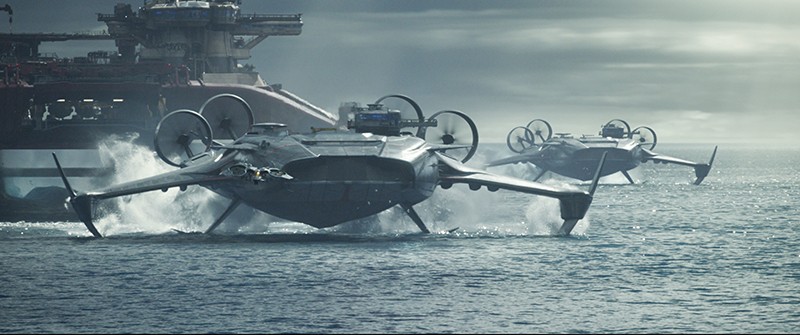 Scene from James Cameron's Avatar: Fire and Ash, the latest in the trilogy. Photo: Disney Press
It is not that science fiction lacks depth. Christopher Nolan, who made Interstellar, has repeatedly stressed that spectacle must serve the story — that visual effects are meaningful only when grounded in character and narrative stakes. Indeed, films like Interstellar or The Matrix combine technological innovation with coherent storytelling. The problem arises when novelty overwhelms narrative — when the film seems too enamoured of what computers can do.
Francis Ford Coppola has warned that cinema risks becoming overly corporate and technology-driven, losing its intimate human core. That warning resonates deeply today. When we watched 2001: A Space Odyssey by Stanley Kubrick decades ago, it was visually revolutionary, yet what lingered after we left the hall was not merely its novelty but its profound meditation on human existence and machine consciousness.
 Scene from James Cameron's Avatar: Fire and Ash, the latest in the trilogy. Photo: Disney Press
Today, marvellous algorithm-driven images often overwhelm the screenplay — the very heart of cinema. Violence too occupies centre stage in many big productions, even as society grapples with rising aggression and mental health concerns. Research shows that cinema, the ‘Seventh Art’, can influence behaviour by normalising certain actions. The responsibility of storytelling, therefore, is immense.
Thank God, then, for the ‘small’ films that survive despite the onslaught of big-budget spectacles — films modest in scale but rich in soul. They remind us that cinema is not merely about what dazzles the eye, but what stirs the conscience. They make it worth going to the theatre — if they get released, that is, and do not disappear within a week.
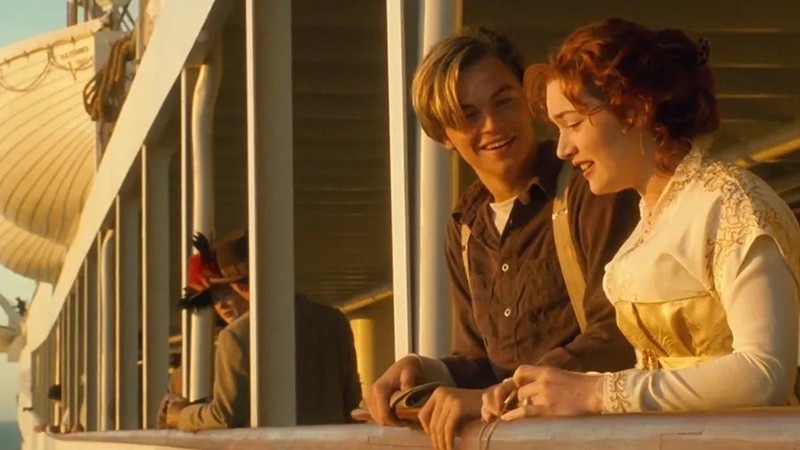 Cameron's 1997 film Titanic won hearts as a love story written around the tragic sinking of the ship. Photo: Wallpapers.com