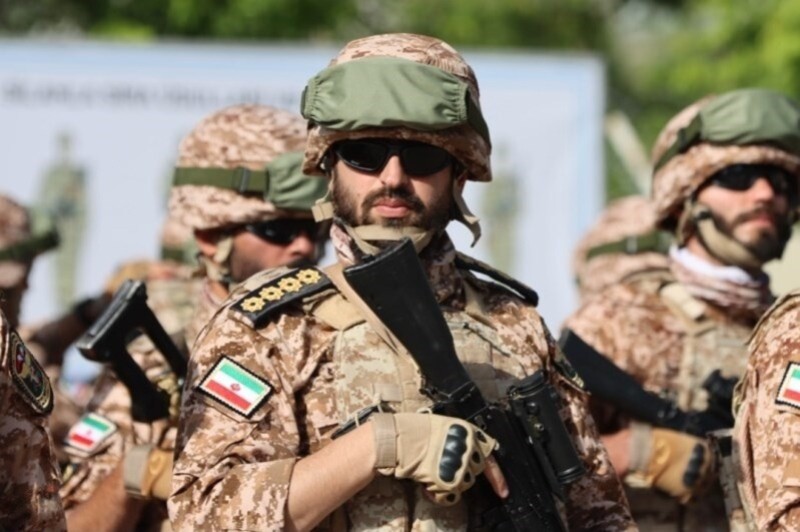
The move follows weeks of unrest in Iran, during which human rights groups say security forces, including the IRGC, killed thousands of demonstrators.
EU foreign policy chief Kaja Kallas said the designation was unavoidable, declaring that “repression cannot go unanswered.”
Repression cannot go unanswered.
— Kaja Kallas (@kajakallas) January 29, 2026
EU Foreign Ministers just took the decisive step of designating Iran’s Revolutionary Guard as a terrorist organisation.
Any regime that kills thousands of its own people is working toward its own demise.
By blacklisting the IRGC, the EU places Iran’s most influential military force in the same category as extremist groups such as al-Qaeda and the Islamic State.
Human rights abuses drive EU decision
According to international rights organisations, Iran’s security apparatus unleashed unprecedented force during protests in December and January, resulting in mass casualties.
Estimates vary widely, but multiple groups report thousands of deaths, most of them protesters.
French Foreign Minister Jean-Noël Barrot, speaking in Brussels, described the crackdown as “the most violent repression in Iran’s modern history” and said Europe could not allow such actions to go unpunished.
The EU said the decision reflected clear evidence of systematic violence, arbitrary arrests, and the targeting of political activists and human rights defenders.
Iran’s security forces are responsible for mass killings.
— Kaja Kallas (@kajakallas) January 29, 2026
Today, we are imposing new sanctions on those directly responsible for the violent crackdown on protests that has killed thousands.
I also expect that Foreign Ministers will take a political decision for the EU to… pic.twitter.com/P6Rj1bM3HR
France reverses course, backs terror listing
France, which had previously expressed concerns that designating the IRGC could sever remaining diplomatic channels with Tehran, shifted its position this week and threw its support behind the move.
Italy had led the push for the terror designation, which ultimately secured unanimous backing among EU member states.
Kallas said the decision sent a direct warning to Iran’s leadership that internal repression carries international consequences, even as she stressed that diplomatic contacts with Tehran would remain open.
New sanctions target senior Iranian officials
Alongside the terror listing, the EU imposed fresh sanctions on six Iranian entities and 15 individuals accused of orchestrating the crackdown.
Those sanctioned include Interior Minister Eskandar Momeni, Prosecutor General Mohammad Movahedi Azad, and judge Iman Afshari.
The bloc said all those targeted played direct roles in violent repression and the prosecution of peaceful protesters.
Sanctions include travel bans and asset freezes designed to dismantle support networks linked to abuses.
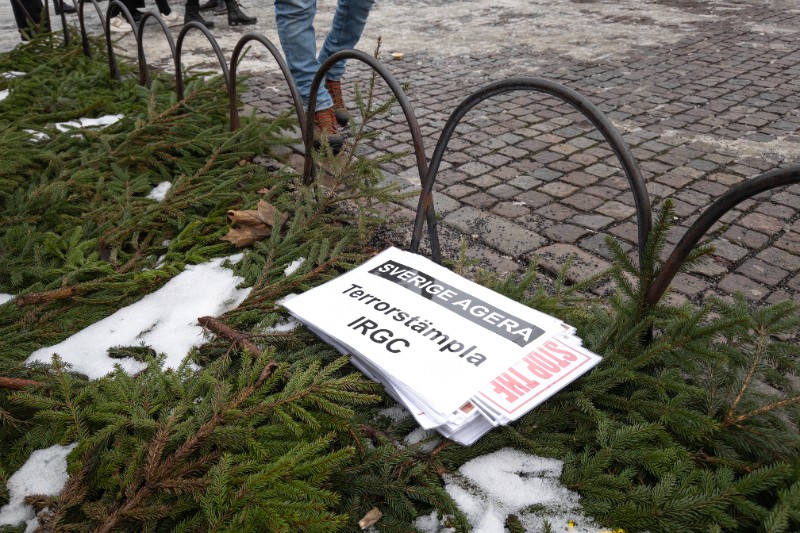 A placard reads "Sweden act, designate IRGC as terrorists!" following demonstrations against the Iranian regime in Sweden, January 17, 2026. Photo: Wikimedia Commons/Crannofonix News
Tehran condemns move as strategic error
Iran reacted angrily to the announcement, with Foreign Minister Abbas Araghchi dismissing the EU’s decision as a political “stunt” and a “major strategic mistake.”
He accused Europe of worsening regional instability rather than preventing escalation.
Araghchi warned that Iran’s armed forces were fully prepared to respond forcefully to any aggression, saying they were “with their fingers on the trigger.”
The power of IRGC
Formed in the aftermath of the 1979 Islamic Revolution, the IRGC is Iran’s most powerful military institution, operating independently of the regular army and answering directly to the Supreme Leader.
It is estimated to have around 190,000 active personnel, with land, air, and naval capabilities, as well as oversight of Iran’s strategic weapons programs.
Beyond Iran’s borders, the IRGC wields influence by funding, arming, and advising allied militias and governments across the region.
Domestically, it controls the Basij Resistance Force, a vast paramilitary organisation frequently deployed to crush dissent.
International response remains divided
While the United States, Canada, and Australia have already designated the IRGC as a terrorist organisation, the United Kingdom has yet to do so.
UK Deputy Prime Minister David Lammy condemned Iran’s repression of protesters but said London does not comment publicly on whether specific groups are being considered for proscription.
Rising US-Iran tensions add to volatility
The EU’s decision comes amid heightened tensions between Washington and Tehran.
US President Donald Trump recently warned that a “massive Armada” was moving toward Iran, urging Tehran to return to negotiations over its nuclear programme.
Although Trump said he hoped to avoid military confrontation and pursue talks, he stressed that the US military was prepared for action if diplomacy failed.
Iranian officials responded by accusing Western powers of inflaming the situation.
Conflicting death tolls highlight information blackout
Assessing the true scale of Iran’s crackdown remains difficult due to an internet blackout imposed by authorities.
The US-based Human Rights Activists News Agency has documented more than 6,300 deaths, while Norway-based Iran Human Rights estimates the toll could exceed 25,000.
Iranian officials, however, claim just over 3,100 people were killed, arguing that many were security personnel or bystanders caught up in violence by what they describe as “rioters.”