
The U.S. Central Command (CENTCOM) said the strikes were carried out in direct response to Iran's recent attacks on commercial vessels transiting the Strait of Hormuz.
— U.S. Central Command (@CENTCOM) July 8, 2026
"U.S. forces struck Iranian air defense systems, command and control networks, coastal radar sites, anti-ship missile capabilities, and more than 60 Islamic Revolutionary Guard Corps small boats in and near the strait to degrade Iran’s ability to continue attacking international commerce flowing through the international trade corridor," CENTCOM said in a statement.
According to the U.S. military, Iran recently attacked three commercial vessels passing through the strategic waterway: the Marshall Islands-flagged M/T Al Rekayyat, the Saudi Arabia-flagged M/T Wedyan, and the Liberian-flagged M/T Cyprus Prosperity.
"The unwarranted aggression by Iranian forces is a clear and dangerous violation of the ceasefire and undermines freedom of navigation," the statement added.
Warning Tehran against further escalation, CENTCOM said: "CENTCOM forces remain postured and prepared to hold Iran accountable when the agreement is not adhered to or obeyed."
Major MOU Violations by the US:
— محمدباقر قالیباف | MB Ghalibaf (@mb_ghalibaf) July 8, 2026
Violating Iranian adjustments in the Strait
Persistent threats of further strikes
Reinstating oil sanctions
Attacks on southern Iran
Continued Zionist aggression on🇱🇧
The era of bullying and extortion is over. It leads nowhere. We don’t fold.
Iran's top negotiator, Mohammad Bagher Ghalibaf, accused the United States of violating the memorandum of understanding (MoU). In a post on X, he wrote: "The era of bullying and extortion is over. It leads nowhere. We don’t fold."
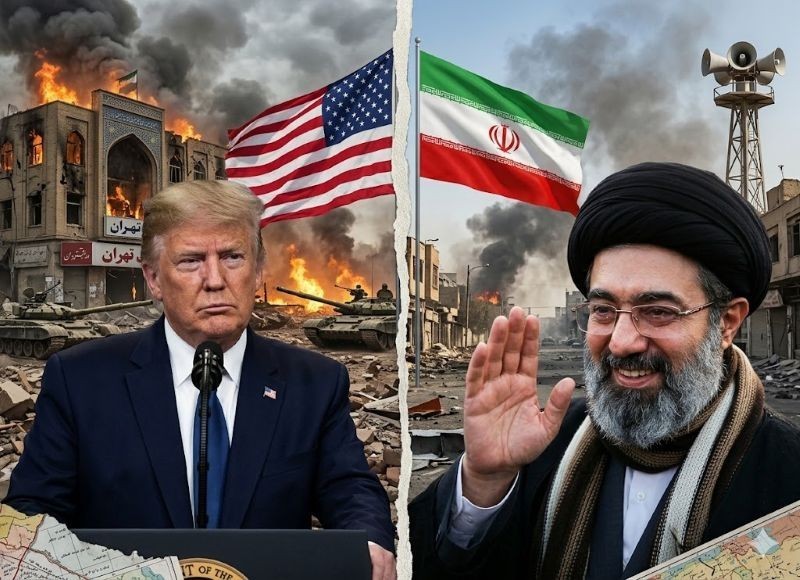
The latest round of strikes has significantly escalated tensions in the Middle East and placed the already fragile ceasefire between the two countries under renewed strain.
Meanwhile, the Iranian military launched drones toward Bahrain, a U.S. official told Axios.
According to the official, Tuesday's strikes were four to five times larger in scale and firepower than the U.S. strikes carried out in the Strait of Hormuz 10 days earlier.
Reports also said that the U.S. Treasury revoked a waiver that had temporarily eased oil sanctions on Iran shortly before launching the strikes.
The conflict began on February 28, when the United States and Israel launched strikes on Iran. Tehran retaliated by targeting Israel and Gulf states hosting U.S. military bases.
The conflict triggered a sharp rise in global oil prices and rattled financial markets worldwide.