
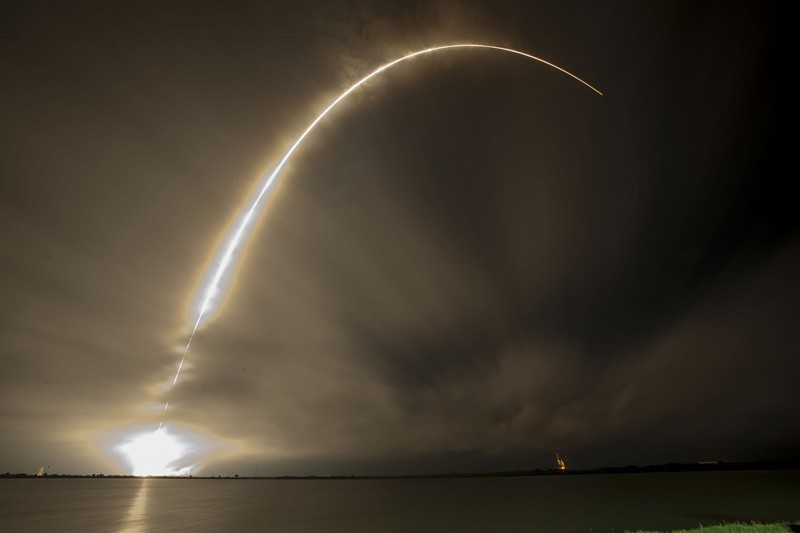
The Joint Chiefs of Staff (JCS) told Yonhap News Agency that it detected the missile being launched from the Wonsan area on North Korea’s east coast at around 6 a.m.
The missile travelled more than 700 kilometres, while South Korean and U.S. authorities are conducting a detailed analysis of its specifications, according to the JCS, Yonhap reported.
The latest launch came just days after North Korea fired what the South Korean military identified as a short-range ballistic missile towards the East Sea on Thursday.
The timing of Wednesday’s launch is significant, as South Korea and the United States are scheduled to begin their annual Ulchi Freedom Shield joint military exercise next week.
Reacting to the launch, Yang Moo-jin, a senior professor at the University of North Korean Studies, told Yonhap that it could be a repeat of last week’s launch following a suspected failure.
“It could be a repeat of last week's launch following its suspected failure and is believed to be a test-firing aimed at improving its missile capabilities,” Yang said.
“Given the intensifying war in Ukraine, it could also be a test to upgrade the Hwasong-11 missiles, which are designed to carry tactical nuclear warheads,” he added.
The U.S. Pacific Command said it was aware of the missile launch and was consulting closely with its allies and partners.
“Based on current assessments, these events do not pose an immediate threat to U.S. personnel or territory, or to our allies,” the command said in a statement.
North Korea’s continued pursuit of nuclear weapons and ballistic missile development remains “a matter of serious concern,” the UN’s political affairs chief told the Security Council in April.
Under-Secretary-General Rosemary DiCarlo made the remarks after North Korea announced a new five-year military development plan, which she said was in violation of multiple Security Council resolutions.
DiCarlo also warned that Pyongyang’s strategy of developing “new secret arsenals” and other military assets poses a challenge to global nuclear disarmament efforts, including the Treaty on the Non-Proliferation of Nuclear Weapons.
UN Security Council Resolution 1718, adopted in 2006, established a framework for targeted sanctions against North Korea, including an arms embargo.
However, international support for maintaining sanctions has faced uncertainty. In 2024, Russia, a permanent member of the Security Council, vetoed a resolution seeking to extend the mandate of a UN panel tasked with monitoring sanctions against North Korea, prompting a subsequent General Assembly debate over the issue.