
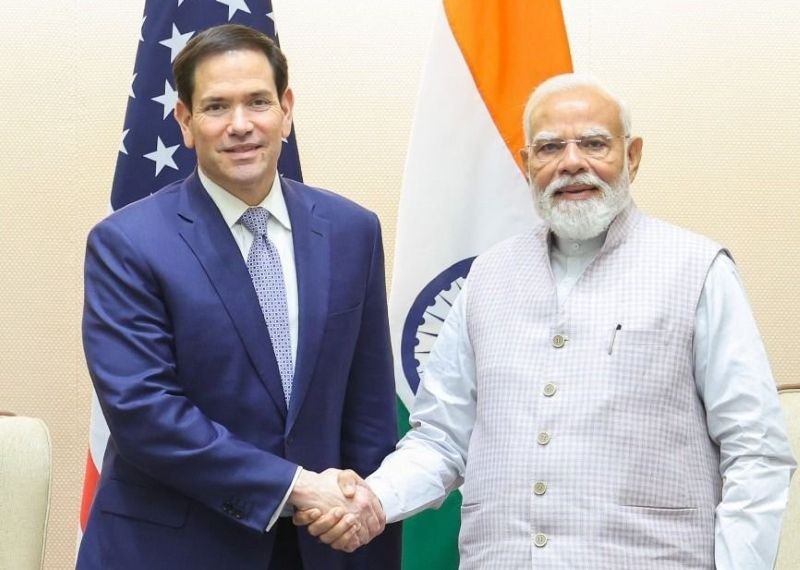
During his two-day visit to India, Rubio told The Indian Express that US President Donald Trump's comparison with the Nixon-Kissinger era of the 1970s was not appropriate, as the global order had changed significantly since then.
"I would not use the 1970s as an example because the world looks nothing like it did back then. Back then, we had the Cold War and all sorts of other dynamics that no longer exist," Rubio said.
"Our relationship with no country in the world, in any way, comes at the expense of our relationship with India... We don't view it that way in our relationship with India," he added.
As the United States celebrates its 250th anniversary, we continue to reaffirm our founding principles of liberty, innovation, and peace through strength that continue to shape American leadership on the global stage. At the Freedom 250 reception in Mumbai, I underscored that these ideals continue to guide us as we deepen U.S.-India ties and advance our shared prosperity through partnership and innovation. Together, we can secure the prosperity of future generations of Americans and Indians.
— Secretary Marco Rubio (@SecRubio) October 21, 2026
US ties with Pakistan and China
Rubio's remarks come amid concerns in India over Washington's engagement with Pakistan and China, both of which have complicated relationships with New Delhi.
Addressing concerns over US-Pakistan ties, Rubio said Washington maintained a relationship with Islamabad that could help discourage actions that might lead to conflict with India.
"Pakistan is a country we have a relationship with, and we need to have a relationship with. And, in some ways, it could be a positive thing if we could help discourage actions that could potentially lead to conflict, if we could use our influence in ways that are positive," Rubio said, as quoted by NDTV.
FULL INTERVIEW: Secretary Rubio Sits Down with the Indian Express https://t.co/M0dGRoxMg9
— Department of State (@StateDept) October 20, 2026
‘Not meant to harm India’: Marco Rubio on Trump’s tariff threat
Rubio acknowledged that Washington's threat to impose 100% tariffs on countries purchasing Russian oil could affect its relationship with India.
However, he clarified that the move was not intended to "harm" New Delhi.
Referring to US President Donald Trump's decision last week to grant tariff waivers, Rubio said the measures were part of Washington's broader foreign policy approach amid the ongoing Russia-Ukraine war.
"None of these tariffs are meant to punish or harm India. They are part of a broader foreign policy that, unfortunately, involves a war going on between Russia and Ukraine that we would like to see come to an end," he said.